
Here’s how you can support and promote the work of the Zinn Education Project.
Donate
 Donate to the Zinn Education Project so that we can sustain the current site and add new components. With your support, we can add classroom film clips, make the site interactive, add lessons for the elementary grades, and hold summer writing workshops for teachers to share and document their stories for the site. Donations of any amount are welcome. Let us know if we can publicly acknowledge your support. Donate today!
Register for the Zinn Education Project
Registration is free and will allow you to download free teaching activities. You will automatically be added to our email list to receive occasional updates.
Connect Your Colleagues and Networks
Make sure other teachers and teacher educators in your networks know about the Zinn Education Project website. Post a notice about the Zinn Education Project on list-serves, in newsletters, on social networking sites, and at your school. You can use any of the web banners at the end of this page for blogs or websites. Here is an announcement you can use or adapt:
The Zinn Education Project: Teaching a People’s History website offers hundreds of free, downloadable teaching activities for middle and high school classrooms to bring people’s history to the classroom. Coordinated by Rethinking Schools and Teaching for Change, the site also lists hundreds of recommended books, films, and websites. The teaching activities and resources are organized by theme, time period and grade level. This is the only collection of its kind for educators — print or online — in the country. Visit and register today.
Share on Social Media
Join our vibrant social media community and share with your network.




Tell Your Story
 Share stories, photos, and/or film clips about how you teach people’s history in your classroom. We will use selected examples for the website and other outreach to demonstrate the impact of teaching people’s history and share teaching ideas. (Remember that, for photos and film clips, there needs to permission from students’ families to use classroom images.) Contribute your story.
Be a Referral
Let us know if we can refer the media to you when they are looking for a teacher in your school district who teaches people’s history. Email us your contact information here.
Volunteer
Volunteers and interns are needed to help with promotion, documentation, identification of more titles for the resource list, and more. Availability in the Washington, D.C. area preferred but not essential. Send your letter of interest and resume here.
Spread the Word
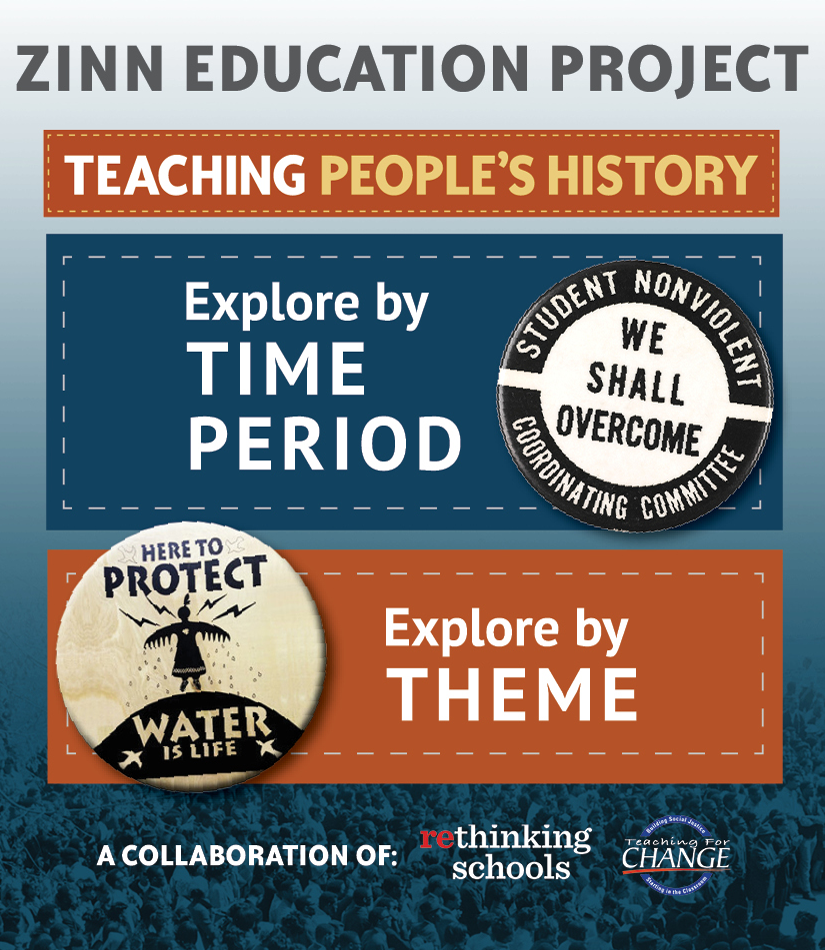
Spread the word by hanging posters, passing out bookmarks and booklets, or having a display at your bookfair, conference or community event. Download the full color poster image below or a full color PDF poster here, printable at almost any size. To request bookmarks or booklets be mailed to you, fill out an online form or email. Order the climate crisis lesson booklet here.
Web Banners
Download to post on your website or blog, hyperlinked to zinnedproject.org.
 Actual size: 1465 x 225 pixels |
||
 Actual size: 825 x 950  Actual size: 850 x 850 pixels |
 Actual size: 850 x 500 pixels  Actual size: 850 x 500 pixels |
 Actual size: 370 x 1075 pixels |
Printed Promotional Items
 |
 |
|
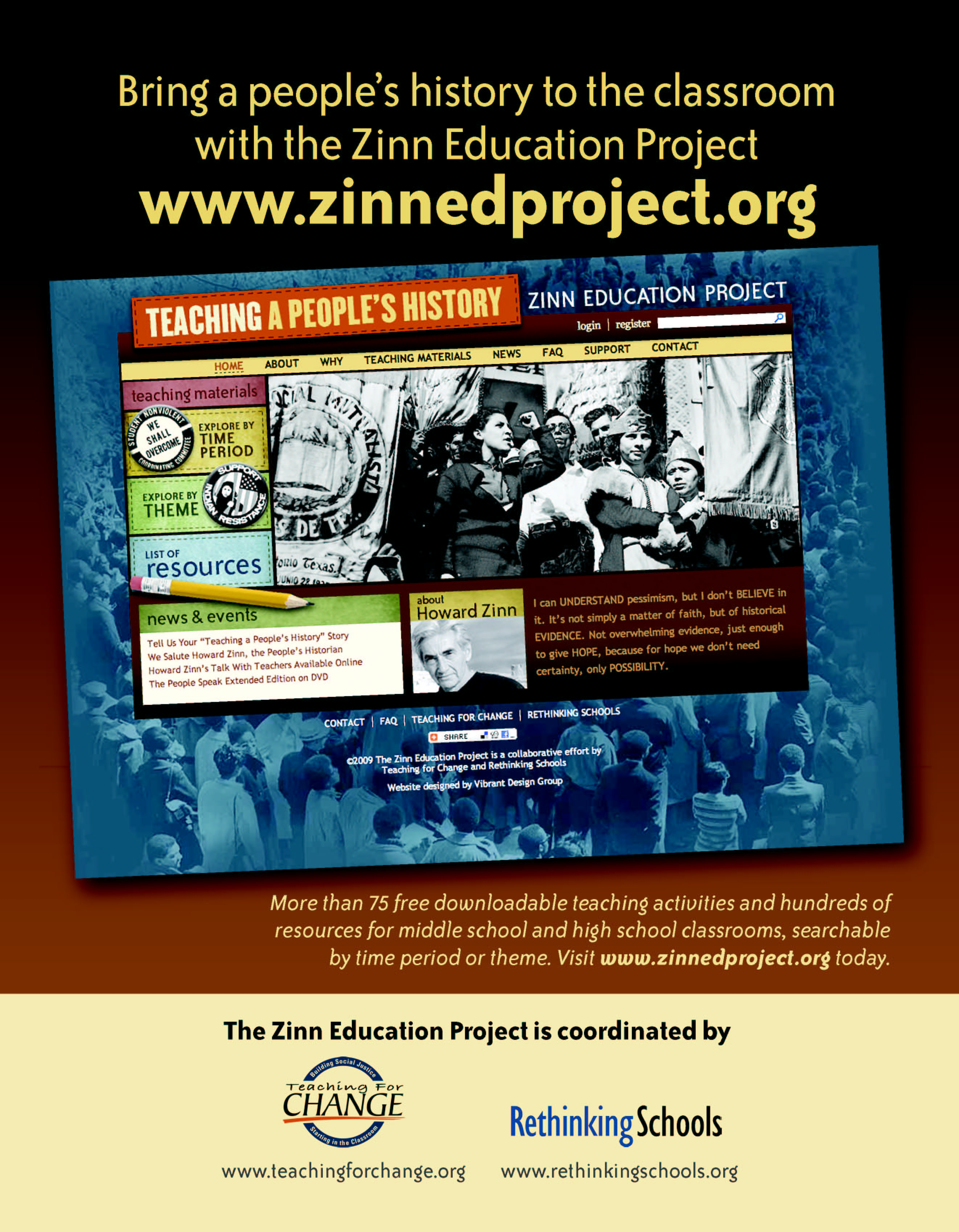
Poster Click image to view a hi-resolution file to download and print at almost any size. |
Stories from the Climate Crisis: A Mixer Booklet Twelve-page booklet offers a sample climate justice lesson from our website. Perfect for small conferences, PD days, and sharing with colleagues.
|
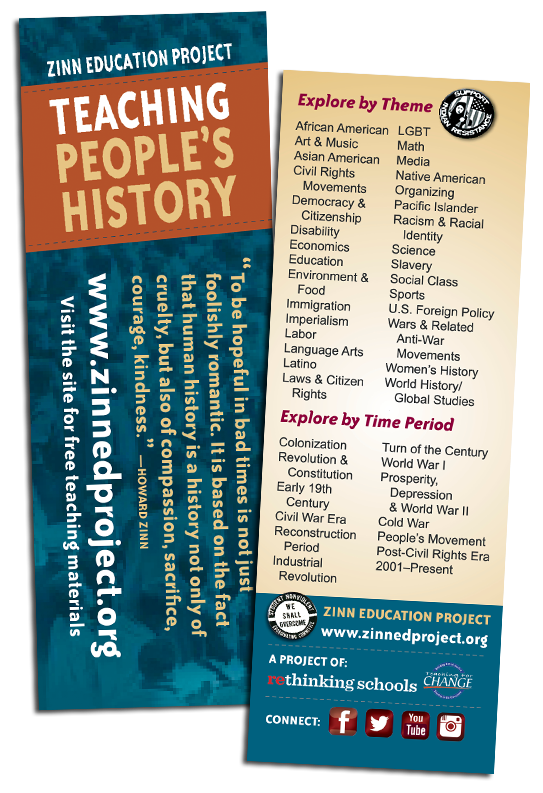 |
Bookmarks Available for free to pass out at events, conferences, and workshops. One side features the themes and time periods you can search by. The other side has a Howard Zinn quote. ▸ Request bookmarks. |