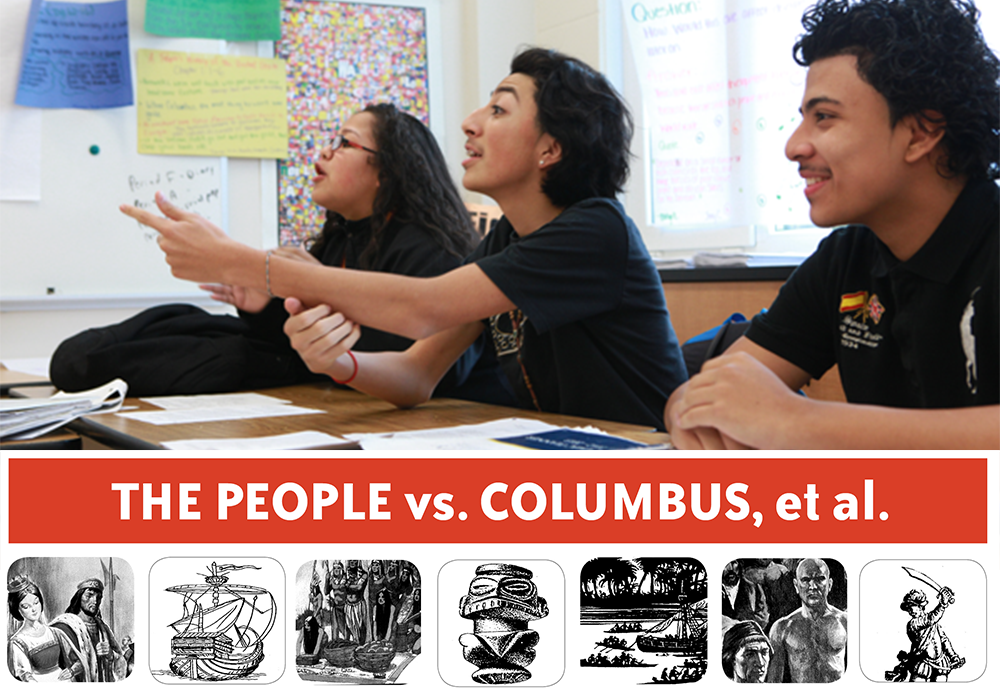
Columbus and Las Casas
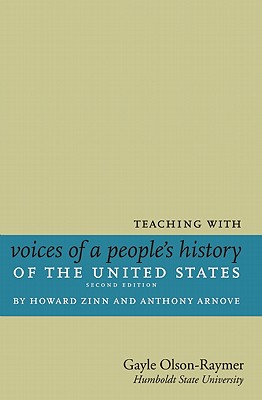
Teaching Activity PDF. By Gayle Olson-Raymer. 15 pages.
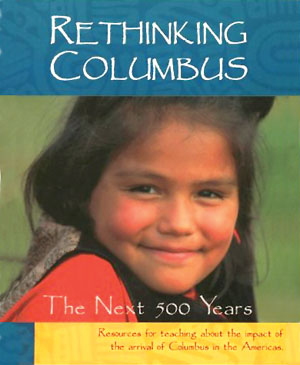
Questions and teaching ideas for Chapter 1 of Voices of a People’s History of the United States on Columbus’ arrival in the “New World,” and the contrasting accounts of Bartolome de Las Casas and Eduardo Galeano.
Download PDF.
The first chapter in Voices of a People’s History provides students with a perspective that many have never encountered. By reading the words of Christopher Columbus, Bartolomé de Las Casas, and Eduardo Galeano, students experience a wide array of emotions. The ensuing discussions may be painful, yet they are also enlightening. These previously unheard perspectives tell them more about the Arawak people and in so doing, encourage students to use their own voices by asking, “Why haven’t I heard these voices before? Why have I only learned half of the story of Columbus and European contact? How could the Spanish have committed such atrocities?”
Some students insist that their previous teachers have “lied” to them. Others believe that their teachers may not have had a complete understanding of the story of Columbus or that they simply never learned the history. In the end, most students agree that an honest, balanced presentation of a diversity of voices is absolutely essential in classroom discussions at all levels of education-elementary, secondary, and postsecondary.
Reprinted from Teaching with Voices of a People’s History of the United States.
Published by Seven Stories Press.
Key words: Columbus, Arawak, native population, Hispaniola, European, Eduardo Galeano, Arawak/Tianos, Santa Cruz Island, Genocide, European Colonization, transatlantic slave trade, imperialism, Spanish Exploration, Revolutionary War, San Juan, Jamaica, Cuba, Guanahaní, Chief Caonabó
Post a comment
Explore by Time Period
- Colonization
- Revolution & Constitution
- Early 19th Century
- Civil War Era
- Reconstruction Period
- Industrial Revolution
- Turn of the Century
- World War I
- Prosperity, Depression, & World War II
- Cold War
- People’s Movement
- 1975 – 2000
- 2001 – Present
- 18th Century
- 19th Century
- 20th Century
- All US History
- 21st Century
Explore by Theme
- African American
- Art & Music
- Asian American
- Civil Rights Movements
- Criminal Justice
- Democracy & Citizenship
- Disability
- Economics
- Education
- Environment & Food
- Immigration
- Imperialism
- Individuals in US History
- Labor
- Language Arts
- Latino
- Laws & Citizen Rights
- LGBT
- Media
- Native American
- Organizing
- Pacific Islander
- Racism & Racial Identity
- Science
- Slavery
- Social Class
- Sports
- US Foreign Policy
- Wars & Related Anti-War Movements
- Women's History
- World History/Global Studies
List of Resources
- Articles
- Audio
- Books: Fiction
- Books: Non-Fiction
- Films
- Picture Books
- Posters
- Profiles
- Songs and Poems
- Spanish/Bilingual
- Teaching Activity PDFs
- Teaching Guides
- Websites
Reading Level
Facebook Status
Zinn Education Project
Saturday, February 4th at 7:12 Today is the birthday of Rosa Louise McCauley Parks (Feb. 4, 1913 – Oct. 24, 2005). Below is a key article by Herbert Kohl from Rethinking Schools that challenges the myths prevalent in children's books and textbooks about Rosa Parks. Here is a link to more resources about Parks and the Montgomery Bus Boycott: http://zinnedproject.org/posts/tag/rosaparks
The Politics of Children’s Literature: What’s Wrong with the Rosa Parks Myth
zinnedproject.org
Aritcle. By Herbert Kohl. 6 pages. A critical analysis that challenges the myths in children’s books about Rosa Parks and the Montgomery Bus Boycott.
Zinn Education Project
Saturday, February 4th at 0:40 via ColorLines Magazine People have taken to Twitter to talk about the histories they wish they'd learned about in high school. Use: #WishiLearnedinHS
Pay Attention! Ethnic Studies #WishiLearnedinHS Curriculum Hits Twitter - COLORLINES
colorlines.com
Educational policies start trending on Twitter.
Zinn Education Project
Friday, February 3rd at 7:25 On this day in 1944, U.S. forces invaded and took control of the Marshall Islands. Who was living there? What is the status of the islands today? The Insular Empire: America in the Marianas is a powerful film on the U.S. colonies in the western Pacific.
Suggestion: ask your students - "Does the U.S. have colonies?" Let us know how they respond.
The Insular Empire: America in the Mariana Islands
zinnedproject.org
The Insular Empire is a one-hour PBS documentary about America’s colonies in the western Pacific. Six thousand miles west of California, the Mariana Islands include the U.S. Territory of Guam and the U.S. Commonwealth of the Northern Mariana Islands (or CNMI). Although most Americans don’t believe t...

You must login to comment.