

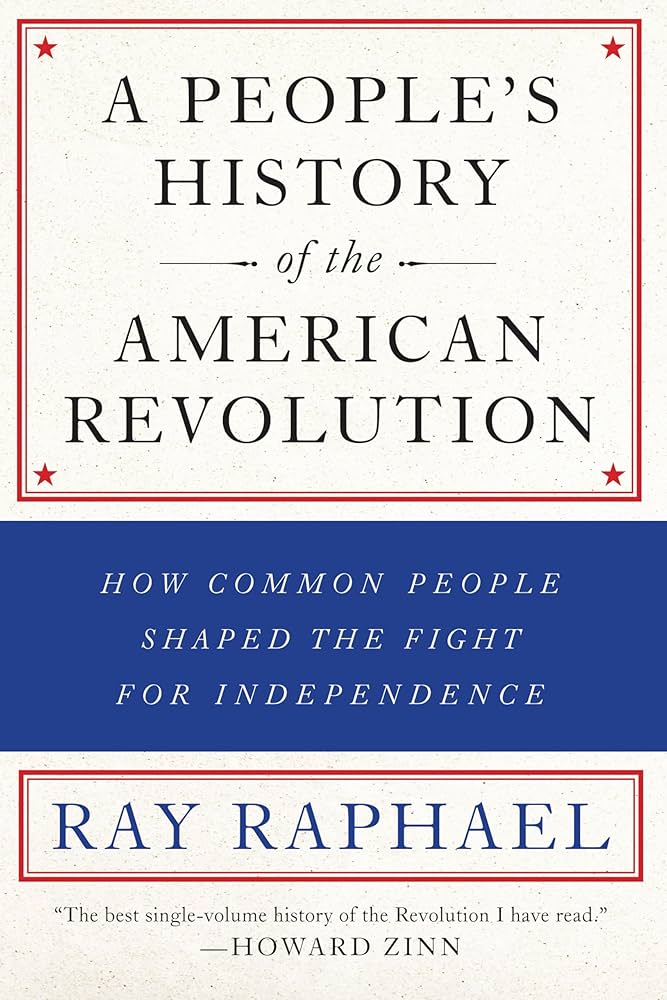
 A sweeping narrative of the wartime experience, A People’s History of the American Revolution is the first book to view the revolution through the eyes of common folk. Their stories have long been overlooked in the mythic telling of America’s founding, but are crucial to a comprehensive understanding of the fight for independence. Now, the experiences of farmers, laborers, rank and file soldiers, women, Native Americans, and African Americans — found in diaries, letters, memoirs and other long-ignored primary sources — create a gritty account of rebellion, filled with ideals and outrage, loss, sacrifice, and sometimes scurrilous acts. . . but always ringing with truth. [Publisher’s description.]
ISBN: 9780060004408 | Harper Perennial
“I have found [Raphael’s] book extraordinary, indeed the best single volume history of the Revolution I have seen.” —Howard Zinn
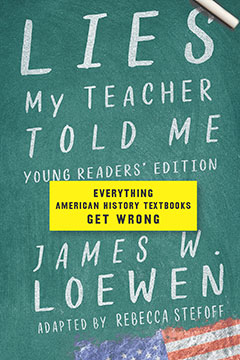
“Ray Raphael shows that, like the Civil Rights Movement, the American Revolution was the product of local people, not just Washington, Jefferson, and Franklin.” —James Loewen, author of Lies My Teacher Told Me
“Raphael transforms the best insights of that scholarship into a lively, readable narrative. . . . Raphael’s study is impressive in both its sweep and its attention to the particular. The book will delight, educate and entertain all Revolution buffs.” —Publishers Weekly
“Raphael rounds out his narrative with fresh voices and well-researched primary sources.” —The Boston Globe
Related resources:
 Ray Raphael’s website offers articles, lessons, and interviews. The website also offers more information about his other books, including The First American Revolution: Before Lexington and Concord (2002), Founding Myths: Stories that Hide Our Patriotic Past (2004), Founders: The People Who Brought You a Nation (2010).
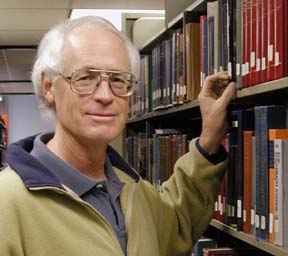 “Debunking Boston Tea Party Myths” article by Ray Raphael in American History, April 1, 2010. What you didn’t learn in school about the Boston Tea Party.
- “Re-examining the Revolution” article by Ray Raphael on the Zinn Education Project website. Based on his book Founding Myths, Raphael critiques the textbook portrayal of the American Revolution. The textbooks say that “a few special people forged American freedom” which “misrepresents, and even contradicts, the spirit of the American Revolution.” Free downloadable article. (Reprinted from Rethinking Schools 16:2, Winter 2004/2005)
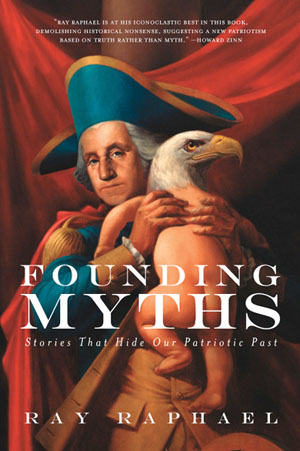


Looking for a gift to give your children this Christmas? Educate them with the truth.