


A December 1773 advertisement for a Sons of Liberty meeting. History textbooks often gloss over — or ignore completely — the massive community organizing effort that underlay the armed rebellion against the British.
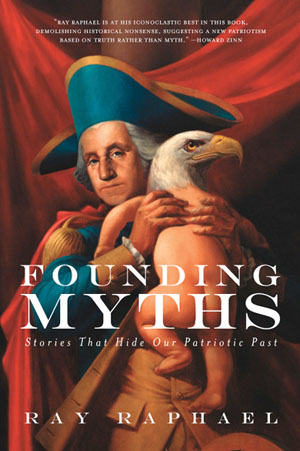
In conjunction with my book, Founding Myths: Stories That Hide Our Patriotic Past, I reviewed 22 elementary, middle school, and high school texts. Fourteen were displayed at a National Council for the Social Studies (NCSS) convention that I attended, while eight are approved for use in California, which has among the strictest criteria in the nation. I compared the 13 mythologies of the American Revolution discussed in my book with those perpetuated in these texts, and the results are startling. Although some texts fare better than others, all contain some serious lapses.
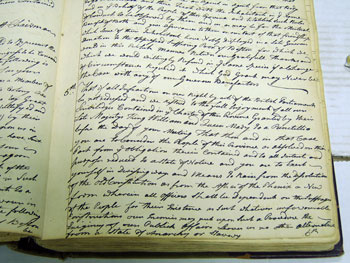
A Declaration of Independence twenty-one months before July 4, 1776. Click image to learn more and see larger picture.
. . . In 1997, Pauline Maier published American Scripture, where she uncovered 90 state and local “declarations of independence” that preceded the U.S. Declaration of Independence. The consequence of this historical tidbit is profound: Jefferson was not a lonely genius conjuring his notions from the ether; he was part of a nationwide political upheaval. Again, textbook writers have watered down the legend while missing the main point. Many now state that Jefferson was part of a five-man congressional committee, but they include no word of those 90 documents produced in less-famous chambers.
Some say these myths are harmless — what damage can stories do? Plenty. They change our view of historical and political processes. Myths that celebrate individual achievement mask fundamental truths of great importance. The United States was founded not by isolated acts of heroism but by the concerted revolutionary activities of people who had learned the power of collaborative effort. “Government has now devolved upon the people,” wrote one disgruntled Tory in 1774, “and they seem to be for using it.” That’s the story the myths conceal.

This article was originally published in the Winter 2004/05 issue of Rethinking Schools magazine. For more critical reviews of textbooks, visit Rethinking Schools.
Related Resources
 Ray Raphael’s website with articles, interviews, a quiz, a detailed critique of commonly used textbooks, and more.




Yes, leaders DO matter. However, glossing over the human landscape, all of the who actually carry out the choices and contribute their own influence at the community level, absolutely has to be acknowledged and explored as much as possible. America adores popular figures, experts, and pariahs. Dedicated historical study is more nuanced and even tedious. Our scholarly efforts yield honest, complex pictures of human history and shed light on what and who we tend to ignore in our institutionalized learning. What we can do with that knowledge is engage personal reflection: “How am I like and different from ______?” Don’t forget that great acts and sacrifices happened behind “closed doors.: Acknowledging the communities of history empowers today’s people to value their choices and contributions to a better country.
The idea that the Revolution was instigated as some effort by the common man promoting a political upheaval is based on an incorrect interpretation of facts. My ancestors wrote of the times as the Revolution (or Rebellion) was fought around them. The nation was as divided then as it is now. My forebears were farmers and considered the revolution to be a rebellion as did almost all their friends. It is obvious that the idea of separation was an widely known idea but it was far from popular. It took leaders to make it happen. Leaders are special men who take a mixture of disparate ideas and mold them into a movement. The uniqueness of the United States is not in some political upheaval instigated by a common movement, it is in the “lonely geniuses” directing opposing views into a recognizable movement with long term implications for good…a movement based upon revolutionary principles.