Women, Gays, and Other Voices of Resistance
Teaching Activity PDF. By Jack Bareilles. 17 pages.
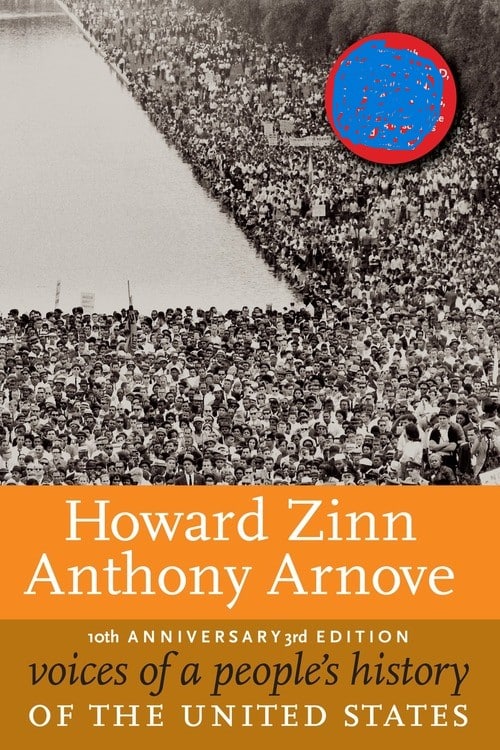
Questions and teaching ideas for Chapter 19 of Voices of a People’s History of the United States on the emergence and legacy of the 1960s counterculture, as well as the movements it helped create.
Download PDF.
In most of our classrooms, discussions of movements of the 1960s generally focus on those big endeavors — civil rights and the antiwar efforts — that are discussed in the traditional textbooks. Yet this approach, as Howard Zinn reminds us, omits an essential topic for discussion—the emergence of a counterculture with “radically different ideas about how people should live their lives.” Indeed, “The United States experienced a general revolt in the culture against oppressive, artificial, previously unquestioned ways of living. This revolt touched every aspect of personal life,” Zinn suggests. Certainly the civil-rights movement and the Vietnam Era protests affected us all, but our lives were also changed forever by the poetry, literature, speeches, and protests of women who demanded their liberation, gays and lesbians who “came out of the closet,” native peoples who launched the Red Power movement, and prisoners who questioned their rights as incarcerated Americans.
As teachers, it is important to bring the voices of the counterculture to our students. And in so doing, we must remain ever mindful that to our students, this revolt has colored and textured the only history they have known. Indeed, in their eyes, today is the way the world has always been. It is imperative, then, that we give our students the tools to understand the events leading up to this transformation, the voices that shaped it, and the way in which it changed the American social landscape.
Reprinted from Teaching with Voices of a People’s History of the United States.
Published by Seven Stories Press.
Post a comment
Explore by Time Period
- Colonization
- Revolution & Constitution
- Early 19th Century
- Civil War Era
- Reconstruction Period
- Industrial Revolution
- Turn of the Century
- World War I
- Prosperity, Depression, & World War II
- Cold War
- People’s Movement
- 1975 – 2000
- 2001 – Present
- 18th Century
- 19th Century
- 20th Century
- All US History
- 21st Century
Explore by Theme
- African American
- Art & Music
- Asian American
- Civil Rights Movements
- Criminal Justice
- Democracy & Citizenship
- Disability
- Economics
- Education
- Environment & Food
- Immigration
- Imperialism
- Individuals in US History
- Labor
- Language Arts
- Latino
- Laws & Citizen Rights
- LGBT
- Media
- Native American
- Organizing
- Pacific Islander
- Racism & Racial Identity
- Science
- Slavery
- Social Class
- Sports
- US Foreign Policy
- Wars & Related Anti-War Movements
- Women's History
- World History/Global Studies
List of Resources
- Articles
- Audio
- Books: Fiction
- Books: Non-Fiction
- Films
- Picture Books
- Posters
- Profiles
- Songs and Poems
- Spanish/Bilingual
- Teaching Activity PDFs
- Teaching Guides
- Websites
Reading Level
Facebook Status
Zinn Education Project
Thursday, February 9th at 13:46 Happy birthday Alice Walker. Author and activist.
History in Pictures - February
Alice Walker, winner of the Pulitzer Prize, author, and activist, was born in Eatonton, Georgia, on Feb. 9, 1944.
See Walker's website for photos, essays, poems, books, and conversations: http://alicewalkersgarden.com/
"Saying goodbye to my friend @[151141887957:274:Howard Zinn]" in @[5637143257:274:The Boston Globe]: http://www.boston.com/ae/books/articles/2010/01/31/alice_walker_says_goodbye_to_her_friend_howard_zinn/
Interviews on @[17414523278:274:Democracy Now!]: http://www.democracynow.org/appearances/alice_walker
Image from Architects of Peace. See more: http://www.architectsofpeace.org/architects-of-peace/alice-walker
History in Pictures features just a few of the many stories that are often left out of the textbooks. The sources for these stories include: This Week in History from Peace Buttons (http://www.peacebuttons.info/E-News/thisweek.htm), Planning to Change the World: A Social Justice Plan Book for Teachers (http://www.justiceplanbook.com/), This Day in Civil Rights History (http://zinnedproject.org/posts/13684), History.com (http://www.history.com/this-day-in-history), 50 American Revolutions You Are Not Supposed to Know (http://zinnedproject.org/posts/11632), A People's History of the United States (http://zinnedproject.org/posts/67), Black Facts Online (http://www.blackfacts.com), Today in Labor History (http://www.unionist.com/big-labor/today-in-labor-history), and many more.
Zinn Education Project
Thursday, February 9th at 13:07 The National Museum of the American Indian is in the early planning stages for an exhibit on the Native people of New York State and the surrounding regions. They seek insights into how teachers are covering historic and contemporary issues around Native Americans in their classrooms so that they can best integrate the needs of students and teachers into the exhibition. If you are currently teaching, or have recently taught content related to Native Americans from the Northeast, they would appreciate hearing your input on the survey at the link below. As a thank you, you will automatically be entered in a raffle to win one of three books.
Zinn Education Project
Thursday, February 9th at 7:31 On this day in 1950, Wisconsin Senator Joseph McCarthy delivered a speech during which he claimed to hold a list of known communists in the U.S. State Dep't. The speech grabbed national headlines and launched the paranoia and persecution now known as “McCarthyism.”
Here are classroom resources, including a young adult novel, on McCarthyism:http://zinnedproject.org/posts/tag/mccarthyism
Are there other books, films, lessons you recommend to teach about McCarthyism?
History in Pictures - February
On Feb 9, 1950, Wisconsin Senator Joseph McCarthy delivered a speech at the McLure Hotel during which he claimed to hold a list of known communists in the U.S. State Department. The speech grabbed national headlines and launched the paranoia and persecution now known as “McCarthyism.”
Here are classroom resources, including a young adult novel, on McCarthyism: http://zinnedproject.org/posts/tag/mccarthyism
History in Pictures features just a few of the many stories that are often left out of the textbooks. The sources for these stories include: This Week in History from Peace Buttons (http://www.peacebuttons.info/E-News/thisweek.htm), Planning to Change the World: A Social Justice Plan Book for Teachers (http://www.justiceplanbook.com/), This Day in Civil Rights History (http://zinnedproject.org/posts/13684), History.com (http://www.history.com/this-day-in-history), 50 American Revolutions You Are Not Supposed to Know (http://zinnedproject.org/posts/11632), A People's History of the United States (http://zinnedproject.org/posts/67), Black Facts Online (http://www.blackfacts.com), Today in Labor History (http://www.unionist.com/big-labor/today-in-labor-history), and many more.

You must login to comment.