Southern Tenant Farmers’ Union: Black and White Unite?
Teaching Activity PDF. By Bill Bigelow and Norm Diamond. 12 pages.
Role play on farm labor organizing in the 1930s shows how racism had to be challenged to create effective worker alliances.
Download Teaching Activity (PDF).
This teaching activity examines efforts by black and white workers to overcome deep divisions and suspicions of racial antagonism. Students are faced with a “What would you do?” assignment that helps them grasp many of the difficulties in achieving some degree of racial unity.
At the same time, they realize the importance of confronting and overcoming racist attitudes. The interview with C.P. Ellis by Studs Terkel is a remarkable example of one individual’s awakening to these issues.
Goals and Objectives
1. Students will explore the difficulties of farm labor organizing in the 1930s.
2. Students will understand how racism divides potential allies.
3. Students will reflect on ways to overcome racism while trying to change oppressive conditions.
Setting for the Student Activity
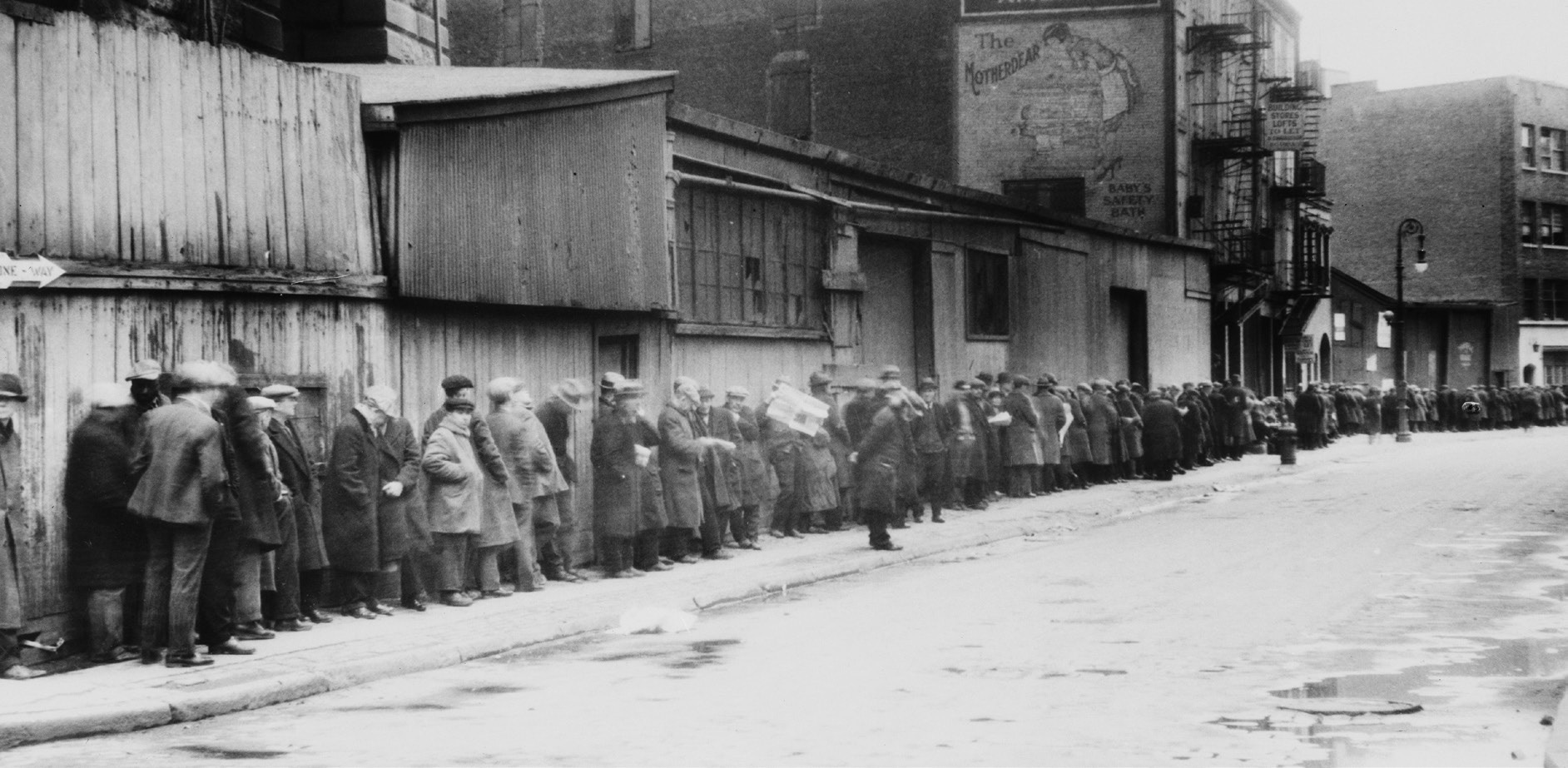
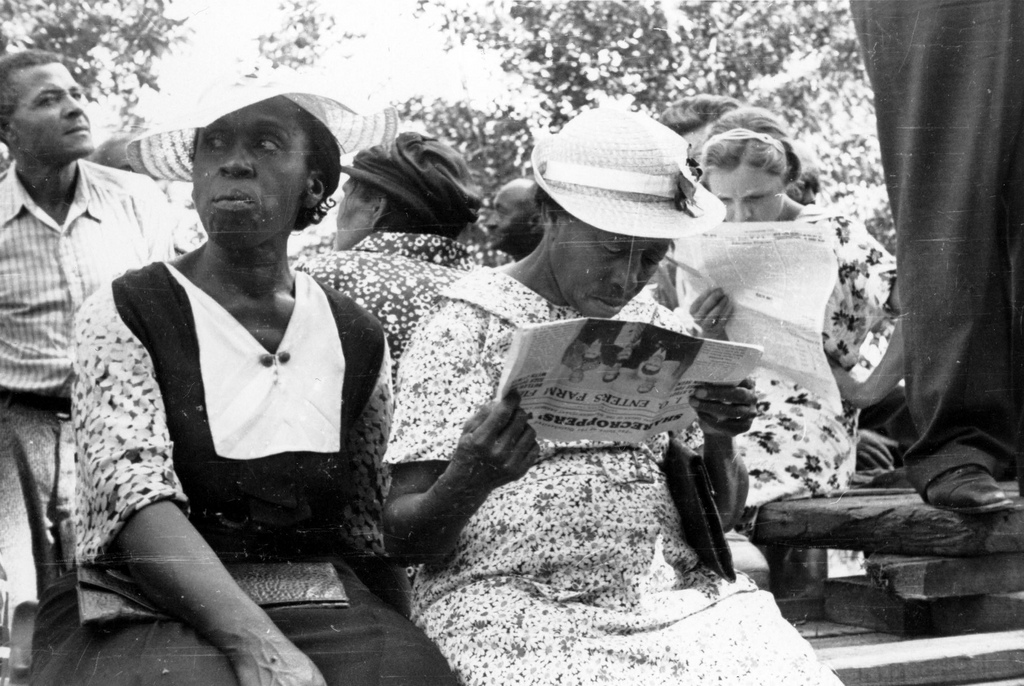
It is the middle of the Great Depression and farmers, especially those who rent land or are “sharecroppers”—people who use others’ land in exchange for part of their crop—are hard hit. For one thing, cotton prices have gone steadily down. The response of the federal government has made matters worse. In 1933 the Agricultural Adjustment Act was passed. The AAA was intended to boost cotton prices by paying farmers to take land out of production. According to the law, no tenant farmers or sharecroppers were supposed to be evicted from their farms. But that’s not how it has worked. Between 1933 and 1934, an estimated 900,000 people—black and white—have been thrown off the land by plantation owners taking advantage of the AAA.
Originally appeared in The Power in Our Hands: A Curriculum on the History of Work and Workers in the United States, published by Rethinking Schools. Power in Our Hands provides over a dozen interactive lessons on labor history. If you are looking for other lessons like “Southern Tenant Farmers’ Union” on key events in U.S. labor history, then Power in Our Hands would be an ideal resource. As Pete Seeger said: “Most school teachers are drowned in paper, but here is one book I want to recommend to them. It is a way of getting American teenagers not just interested, but excited and passionate about their history—modern American labor history.”
Keywords: racism, lesson, sharecroppers, organizing, race, union, plantation owners, farmer, Ku Klux Klan, Arkansas, dialogue, Great Depression, cotton, Agricultural Adjustment Act, “scrip”, Elaine Massacre, Alabama Sharecroppers’ Union, laborers, Naomi Williams, H.L. Mitchell, Tennessee, Norman Thomas, Socialist Party, Clay East, Ward Rogers, Alvin Nunnally, J.R. Butler, opposition, George Stith, segregated, Louisiana, Raceland, American Legion Hall, Dr. Calvin Hoover, Howard Odum, Mr. Henry Wallace, Reverend E.B. McKinney, Reverend N.W. Webb, Paul Appleby, Henrietta McGee, New York, Washington, Industrial Workers of the World (IWW), Studs Terkel, North Carolina, hate, Klansmen, city council, low-income, Ann Atwater, Martin Luther King Jr.
Comments
Post a comment
You must login to comment.
Explore by Time Period
- Colonization
- Revolution & Constitution
- Early 19th Century
- Civil War Era
- Reconstruction Period
- Industrial Revolution
- Turn of the Century
- World War I
- Prosperity, Depression, & World War II
- Cold War
- People’s Movement
- 1975 – 2000
- 2001 – Present
- 18th Century
- 19th Century
- 20th Century
- All US History
- 21st Century
Explore by Theme
- African American
- Art & Music
- Asian American
- Civil Rights Movements
- Criminal Justice
- Democracy & Citizenship
- Disability
- Economics
- Education
- Environment & Food
- Immigration
- Imperialism
- Individuals in US History
- Labor
- Language Arts
- Latino
- Laws & Citizen Rights
- LGBT
- Media
- Native American
- Organizing
- Pacific Islander
- Racism & Racial Identity
- Science
- Slavery
- Social Class
- Sports
- US Foreign Policy
- Wars & Related Anti-War Movements
- Women's History
- World History/Global Studies
List of Resources
- Articles
- Audio
- Books: Fiction
- Books: Non-Fiction
- Films
- Picture Books
- Posters
- Profiles
- Songs and Poems
- Spanish/Bilingual
- Teaching Activity PDFs
- Teaching Guides
- Websites
Reading Level
Facebook Status
Zinn Education Project
Thursday, February 9th at 13:07 The National Museum of the American Indian is in the early planning stages for an exhibit on the Native people of New York State and the surrounding regions. They seek insights into how teachers are covering historic and contemporary issues around Native Americans in their classrooms so that they can best integrate the needs of students and teachers into the exhibition. If you are currently teaching, or have recently taught content related to Native Americans from the Northeast, they would appreciate hearing your input on the survey at the link below. As a thank you, you will automatically be entered in a raffle to win one of three books.
Zinn Education Project
Thursday, February 9th at 7:31 On this day in 1950, Wisconsin Senator Joseph McCarthy delivered a speech during which he claimed to hold a list of known communists in the U.S. State Dep't. The speech grabbed national headlines and launched the paranoia and persecution now known as “McCarthyism.”
Here are classroom resources, including a young adult novel, on McCarthyism:http://zinnedproject.org/posts/tag/mccarthyism
Are there other books, films, lessons you recommend to teach about McCarthyism?
History in Pictures - February
On Feb 9, 1950, Wisconsin Senator Joseph McCarthy delivered a speech at the McLure Hotel during which he claimed to hold a list of known communists in the U.S. State Department. The speech grabbed national headlines and launched the paranoia and persecution now known as “McCarthyism.”
Here are classroom resources, including a young adult novel, on McCarthyism: http://zinnedproject.org/posts/tag/mccarthyism
History in Pictures features just a few of the many stories that are often left out of the textbooks. The sources for these stories include: This Week in History from Peace Buttons (http://www.peacebuttons.info/E-News/thisweek.htm), Planning to Change the World: A Social Justice Plan Book for Teachers (http://www.justiceplanbook.com/), This Day in Civil Rights History (http://zinnedproject.org/posts/13684), History.com (http://www.history.com/this-day-in-history), 50 American Revolutions You Are Not Supposed to Know (http://zinnedproject.org/posts/11632), A People's History of the United States (http://zinnedproject.org/posts/67), Black Facts Online (http://www.blackfacts.com), Today in Labor History (http://www.unionist.com/big-labor/today-in-labor-history), and many more.
Zinn Education Project
Thursday, February 9th at 7:04 Happy birthday Alice Walker. A good day to listen to one of Walker's interviews on Democracy Now!.
Please share your favorite book, essay, or quote by Alice Walker.
Alice Walker on "Overcoming Speechlessness: A Poet Encounters the Horror in Rwanda, Eastern Congo an
www.democracynow.org
As the 2010 Pulitzer Prize winners are announced, we speak with the first African American woman to be awarded a Pulitzer Prize for fiction: author, poet and activist Alice Walker. She was awarded the 1983 Pulitzer for her novel The Color Purple. She was written many books since then. Her latest, ju...

Thank you for this excellent resource. I am a middle-school teacher seeking to infuse curriculum on the Great Depression with real-life history of the incredible organization and struggles of unemployed, industrial workers, African Americans, and others not in most current history books. Would love to share experiences and resources with other such teachers. This piece helps a lot; more to do.
- Kipp Dawson