Reconstructing Race: A Teacher Introduces His Students to the Slippery Concept of Race
Teaching Activity PDF. By Nathanial W. Smith. 6 pages.
A teacher describes a series of lessons he teaches to help his students understand race as a social construct.
Download PDF.
“I really just think it’s so terrible that people judge other people for their race. I don’t see how they can be so stupid! I don’t care if you’re black, yellow, or green. I only see people as people.”
When one of my students made this comment, his classmates applauded. Yet he was the same student who, not a day later, noticed that one of our classroom windows had a broken handle. He laughed, saying the school was “so damn ghetto.” And he openly talked about rap music as “complete crap. It’s not even music—even I can get on a microphone and just talk!” I wondered how I would even begin to get at the contradictions in this student’s mind.
Yes, we should “all get along,” as another student once earnestly implored. But before we can, we must first understand the degree to which we don’t get along. This seemed especially difficult considering the population I was working with. I taught in Central Bucks School District in Bucks County, Penn., which is approximately 98 percent white, and 95 percent middle-class or higher. There was not much in the way of racial and socioeconomic diversity among my 10thand 12th-grade students, who were tracked into honors, standard, and basic classes.
Comments like the ones above were not those of a few idiosyncratic individuals, they were refrains, repeated again and again, often in the exact same wording. I wanted to develop a curriculum that made race enormous, difficult, and personal, when many students defined it as stupid, simple, and external.
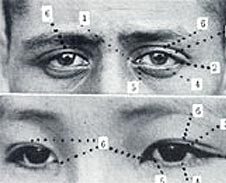
Keywords: Black, white, Central Bucks School District, Bucks County, American Literature, Harlem Renaissance, Pudd’nhead Wilson, Frederick Douglass, Harriet Jacobs, Race: The Power of an Illusion, Gregory Fried, “True Pictures”, antislavery, Benetton-style, racial identities, “talk white”, “act black”, color, culture, ancestry, Malcolm X, African ancestry
Post a comment
Explore by Time Period
- Colonization
- Revolution & Constitution
- Early 19th Century
- Civil War Era
- Reconstruction Period
- Industrial Revolution
- Turn of the Century
- World War I
- Prosperity, Depression, & World War II
- Cold War
- People’s Movement
- 1975 – 2000
- 2001 – Present
- 18th Century
- 19th Century
- 20th Century
- All US History
- 21st Century
Explore by Theme
- African American
- Art & Music
- Asian American
- Civil Rights Movements
- Criminal Justice
- Democracy & Citizenship
- Disability
- Economics
- Education
- Environment & Food
- Immigration
- Imperialism
- Individuals in US History
- Labor
- Language Arts
- Latino
- Laws & Citizen Rights
- LGBT
- Media
- Native American
- Organizing
- Pacific Islander
- Racism & Racial Identity
- Science
- Slavery
- Social Class
- Sports
- US Foreign Policy
- Wars & Related Anti-War Movements
- Women's History
- World History/Global Studies
List of Resources
- Articles
- Audio
- Books: Fiction
- Books: Non-Fiction
- Films
- Picture Books
- Posters
- Profiles
- Songs and Poems
- Spanish/Bilingual
- Teaching Activity PDFs
- Teaching Guides
- Websites
Reading Level
Facebook Status
Zinn Education Project
Sunday, February 5th at 19:12 Thanks to Independent Lens | PBS you can see the film "Daisy Bates: First Lady of Little Rock" for free online through 2/16. Along with the film, you can use the free downloadable lesson by Linda Christensen on the Little Rock Nine: http://zinnedproject.org/posts/1447
Daisy Bates: First Lady of Little Rock
zinnedproject.org
Film. Directed by Sharon LaCruise. 2011. Documentary on the life of Daisy Bates, best know for her role with the Little Rock Nine.
Zinn Education Project
Saturday, February 4th at 7:12 Today is the birthday of Rosa Louise McCauley Parks (Feb. 4, 1913 – Oct. 24, 2005). Below is a key article by Herbert Kohl from Rethinking Schools that challenges the myths prevalent in children's books and textbooks about Rosa Parks. Here is a link to more resources about Parks and the Montgomery Bus Boycott: http://zinnedproject.org/posts/tag/rosaparks
The Politics of Children’s Literature: What’s Wrong with the Rosa Parks Myth
zinnedproject.org
Aritcle. By Herbert Kohl. 6 pages. A critical analysis that challenges the myths in children’s books about Rosa Parks and the Montgomery Bus Boycott.
Zinn Education Project
Saturday, February 4th at 0:40 via ColorLines Magazine People have taken to Twitter to talk about the histories they wish they'd learned about in high school. Use: #WishiLearnedinHS
Pay Attention! Ethnic Studies #WishiLearnedinHS Curriculum Hits Twitter - COLORLINES
colorlines.com
Educational policies start trending on Twitter.

You must login to comment.