Half a Revolution
Teaching Activity PDF. By Gayle Olson-Raymer. 16 pages.
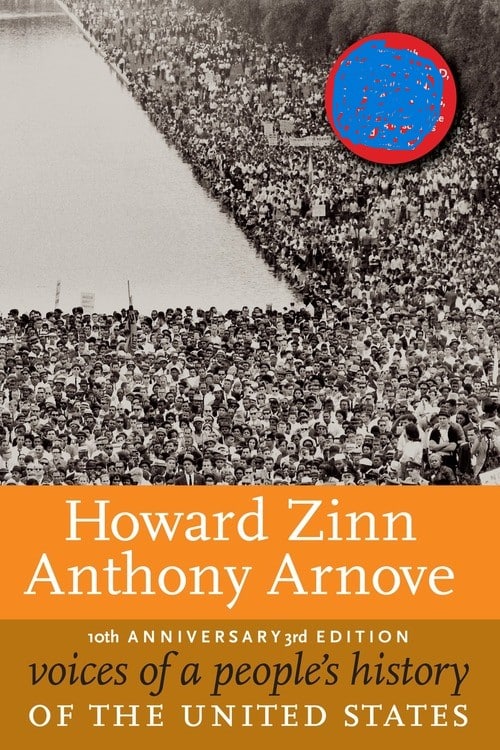
Questions and teaching ideas for Chapter 5 of Voices of a People’s History of the United States on the Revolutionary War as “a rich man’s war and a poor man’s fight,” as well as the failure of early Americans to complete a full revolution.
Download PDF.
“A rich man’s war and a poor man’s fight.” This much-quoted phrase seems as relevant today as it did during the Revolutionary War. The documents in “Half a Revolution” illustrate this fight and the way in which it was carried out during and immediately after the Revolutionary War. Independence, it seems, did not bring an end to the fighting between various “factions.” To Joseph Plumb Martin, the “poor soldiers” served their country well during the war, but afterward “they were turned adrift like old worn-out horses.” Samuel Dewees recalled that the soldiers at York “were afraid to say or to do any thing” for fear of punishment, and Dewees avoided encountering officers lest they might “construe my conduct in some way or other into an offense.” Henry Knox described the need of “men of reflection, and principle” to be protected “in their lawful pursuits” from “the violence of lawless men.” And James Madison worried about ways to control “the majority” who may be led by “the mischiefs of faction.”
These factions, and the way in which both the Articles of Confederation and the Constitution dealt with them, resulted in “half a revolution.” Indeed, a revolution in its entirely would have required an end to class conflict by welcoming American Indians into North American society, outlawing slavery, and granting equal rights to American women—in other words, creating a new society characterized by economic, social, racial, and political equality.
Reprinted from Teaching with Voices of a People’s History of the United States.
Published by Seven Stories Press.
Post a comment
Explore by Time Period
- Colonization
- Revolution & Constitution
- Early 19th Century
- Civil War Era
- Reconstruction Period
- Industrial Revolution
- Turn of the Century
- World War I
- Prosperity, Depression, & World War II
- Cold War
- People’s Movement
- 1975 – 2000
- 2001 – Present
- 18th Century
- 19th Century
- 20th Century
- All US History
- 21st Century
Explore by Theme
- African American
- Art & Music
- Asian American
- Civil Rights Movements
- Criminal Justice
- Democracy & Citizenship
- Disability
- Economics
- Education
- Environment & Food
- Immigration
- Imperialism
- Individuals in US History
- Labor
- Language Arts
- Latino
- Laws & Citizen Rights
- LGBT
- Media
- Native American
- Organizing
- Pacific Islander
- Racism & Racial Identity
- Science
- Slavery
- Social Class
- Sports
- US Foreign Policy
- Wars & Related Anti-War Movements
- Women's History
- World History/Global Studies
List of Resources
- Articles
- Audio
- Books: Fiction
- Books: Non-Fiction
- Films
- Picture Books
- Posters
- Profiles
- Songs and Poems
- Spanish/Bilingual
- Teaching Activity PDFs
- Teaching Guides
- Websites
Reading Level
Facebook Status
Zinn Education Project
Sunday, February 5th at 19:12 Thanks to Independent Lens | PBS you can see the film "Daisy Bates: First Lady of Little Rock" for free online through 2/16. Along with the film, you can use the free downloadable lesson by Linda Christensen on the Little Rock Nine: http://zinnedproject.org/posts/1447
Daisy Bates: First Lady of Little Rock
zinnedproject.org
Film. Directed by Sharon LaCruise. 2011. Documentary on the life of Daisy Bates, best know for her role with the Little Rock Nine.
Zinn Education Project
Saturday, February 4th at 7:12 Today is the birthday of Rosa Louise McCauley Parks (Feb. 4, 1913 – Oct. 24, 2005). Below is a key article by Herbert Kohl from Rethinking Schools that challenges the myths prevalent in children's books and textbooks about Rosa Parks. Here is a link to more resources about Parks and the Montgomery Bus Boycott: http://zinnedproject.org/posts/tag/rosaparks
The Politics of Children’s Literature: What’s Wrong with the Rosa Parks Myth
zinnedproject.org
Aritcle. By Herbert Kohl. 6 pages. A critical analysis that challenges the myths in children’s books about Rosa Parks and the Montgomery Bus Boycott.
Zinn Education Project
Saturday, February 4th at 0:40 via ColorLines Magazine People have taken to Twitter to talk about the histories they wish they'd learned about in high school. Use: #WishiLearnedinHS
Pay Attention! Ethnic Studies #WishiLearnedinHS Curriculum Hits Twitter - COLORLINES
colorlines.com
Educational policies start trending on Twitter.

You must login to comment.