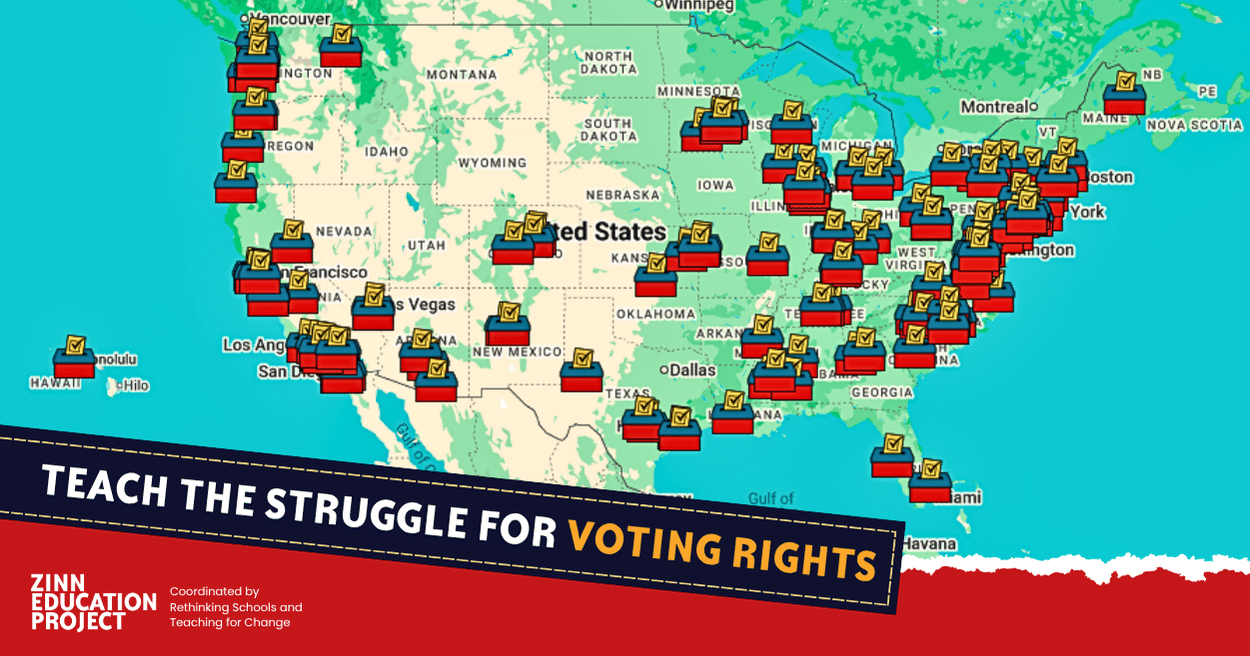
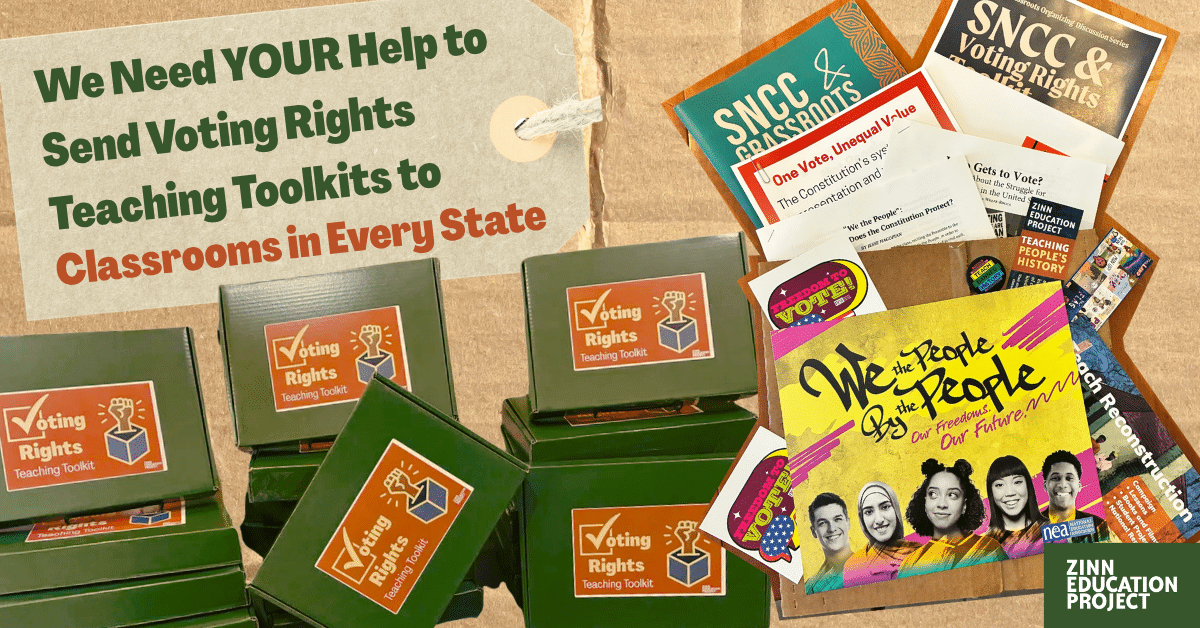
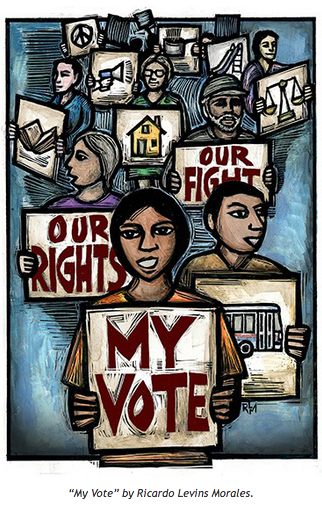
Thanks to donations, we are sending Voting Rights Teaching Toolkits to teachers. These toolkits help young people see voting as part of a broader effort to improve their lives and communities — and to see themselves as agents of change rather than spectators to politics.
Continue reading
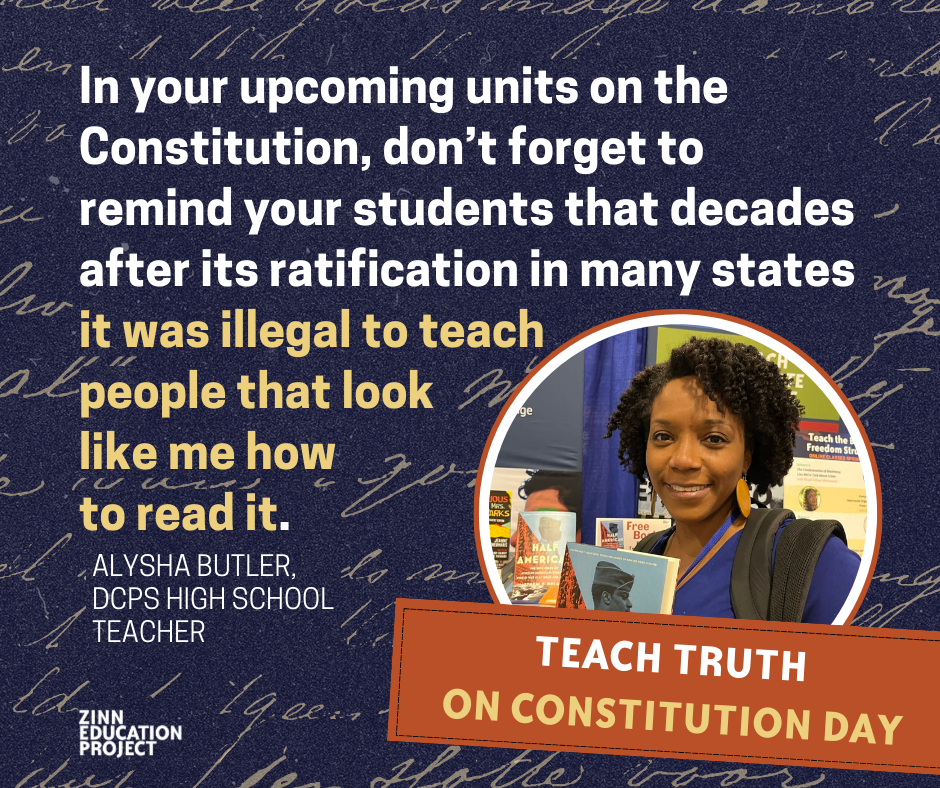
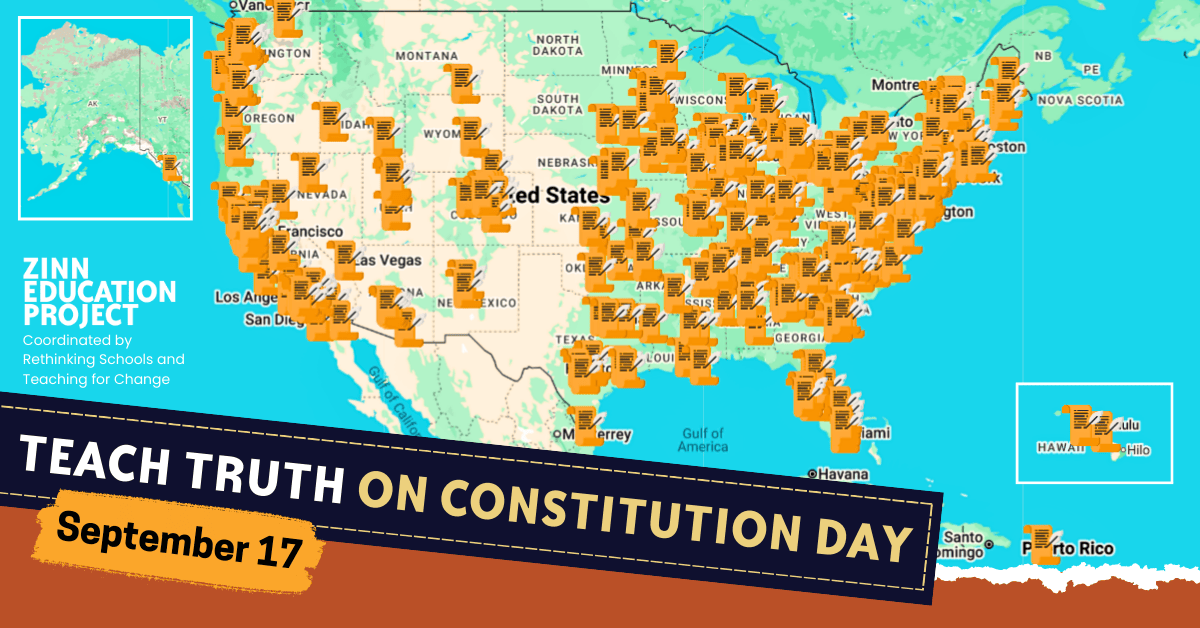
It is essential that students know their rights: not just to pass a test, but to protect themselves. We offer FIVE ways to Teach Truth on Constitution Day.
Continue reading
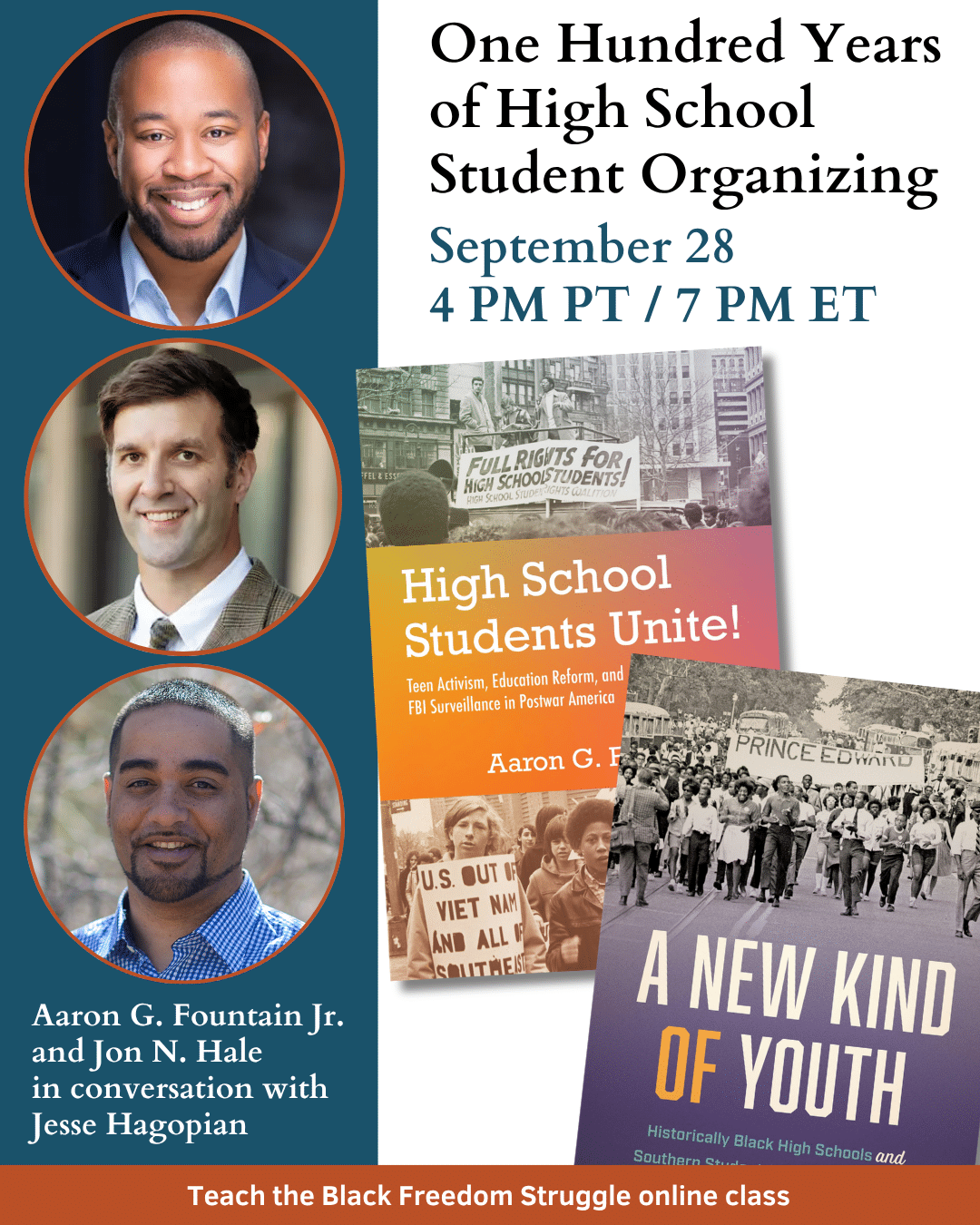
Rethinking Schools editor Jesse Hagopian will be in conversation with historians Aaron G. Fountain Jr. and Jon N. Hale about student organizing and state repression. This class is part of the Zinn Education Project’s Teach the Black Freedom Struggle online people’s history series.
Continue reading
To contribute to national efforts to get out the vote and defend the elections, we encourage middle and high school teachers to focus on voting rights and the Constitution in September and October. We ask for your help to send free voting rights toolkits to educators nationwide.
Continue reading
Studying the Constitution is essential — especially now, as constitutional rights are increasingly under attack. We offer activities to teach truthfully about the Constitution on Constitition Day and all year long.
Continue reading
We are witnessing a vicious attack on voting rights, democratic participation, and truthful education. History reminds us that we must organize to protect the gains won through generations of struggle.
Continue reading
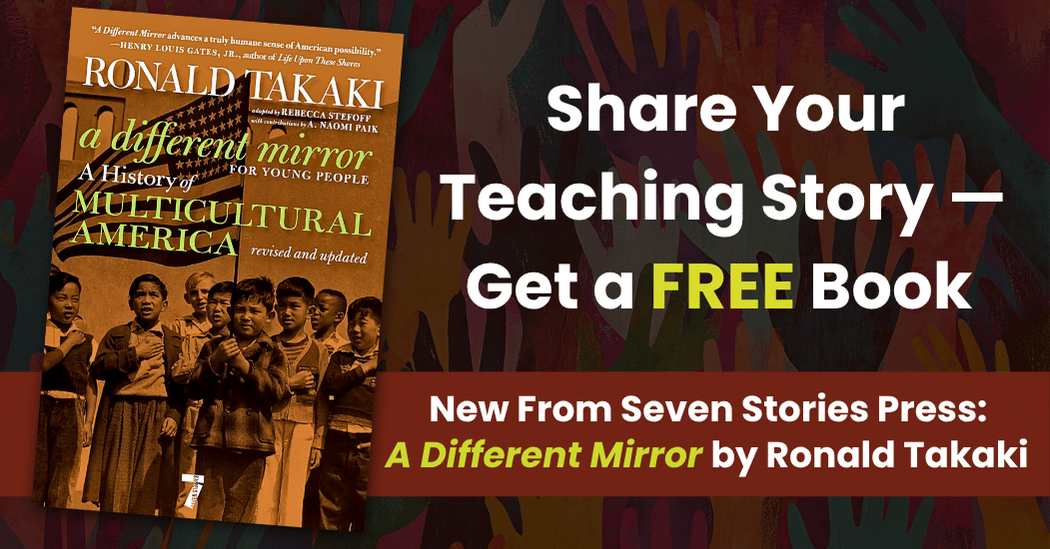
Thanks to a donation by Seven Stories Press, we can offer 100 individual copies to public school teachers and teacher educators of the new edition of A Different Mirror for Young People: A History of Multicultural America by Ronald Takaki.
Continue reading
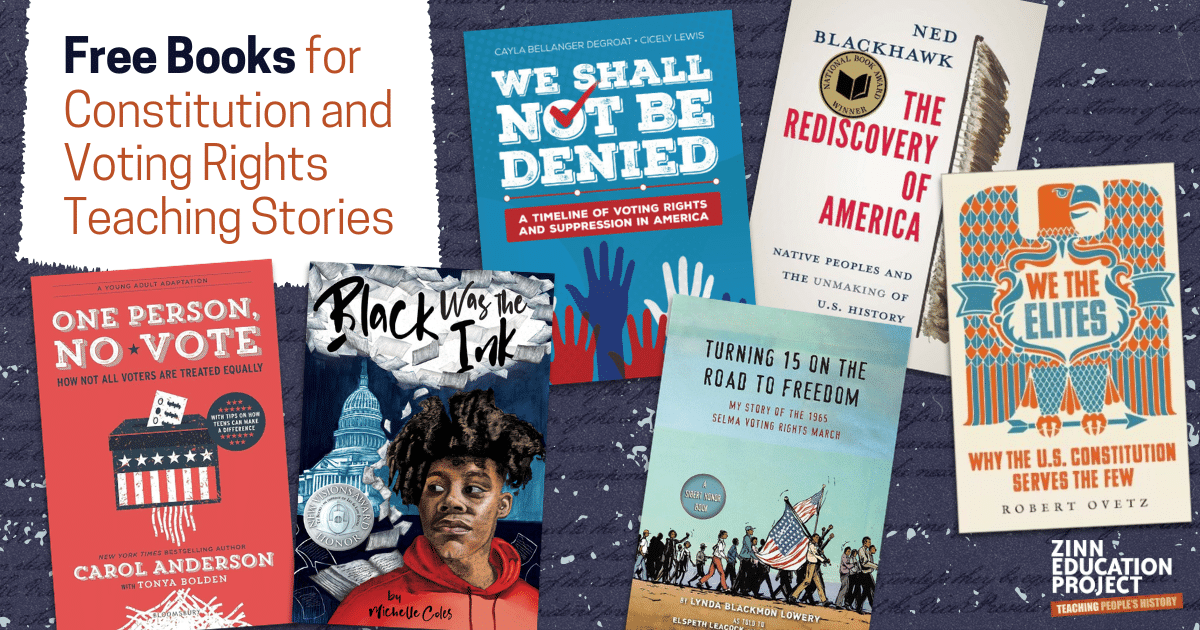
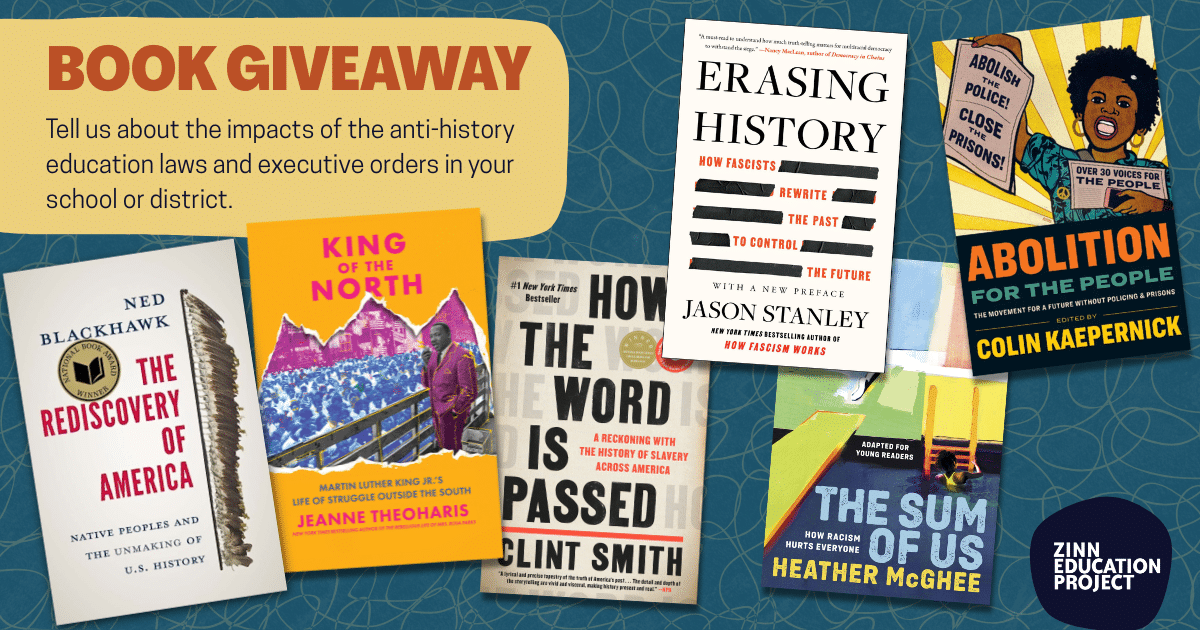
In appreciation for your story about your teaching activities using any of our lessons on Voting Rights and/or the Constitution, we can send you one of several books thanks to donations by publishers.
Continue reading
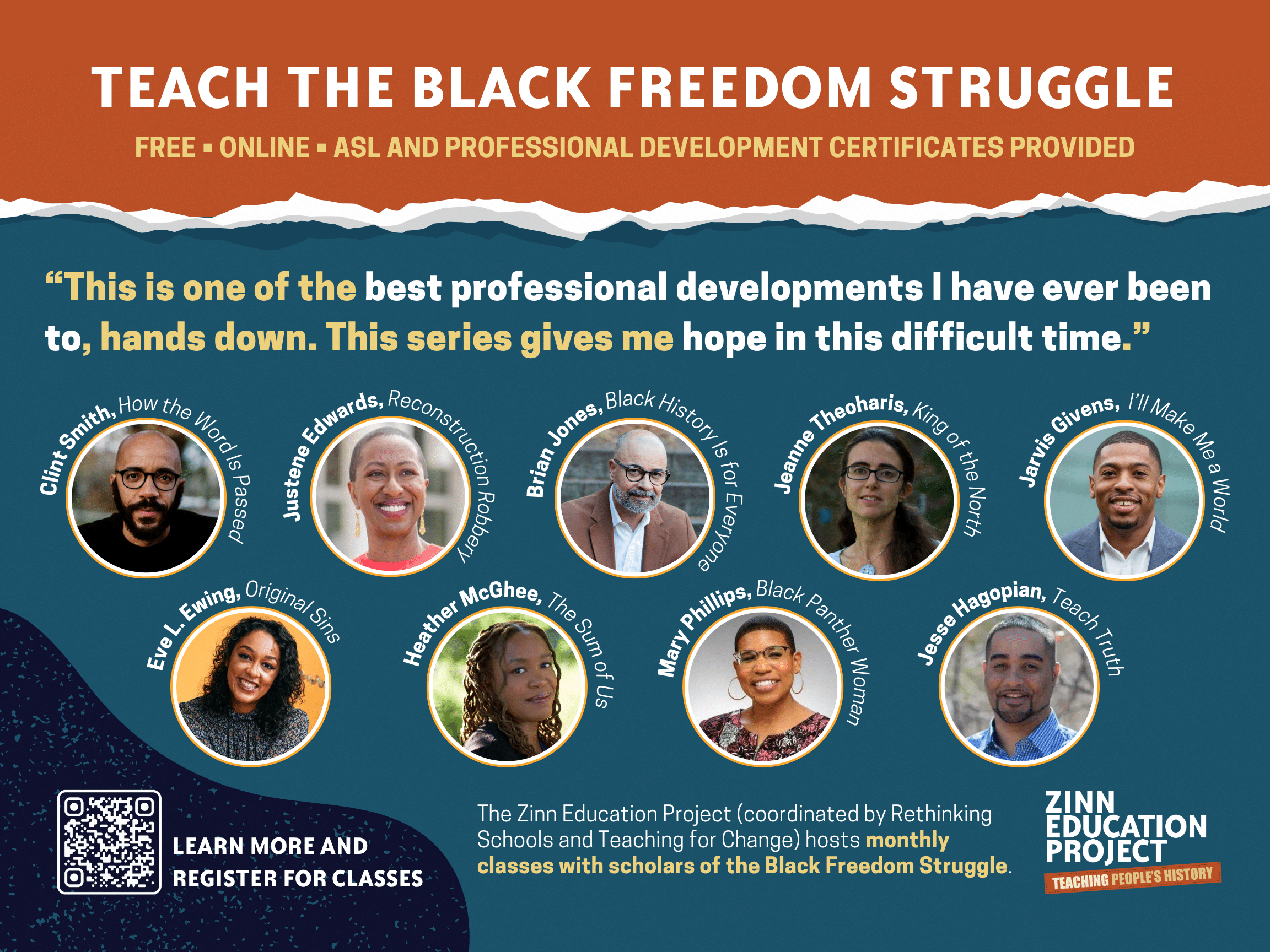
Online classes for educators on teaching the Black Freedom Struggle. People's historians interviewed by classroom teachers and teacher educators.
Continue reading
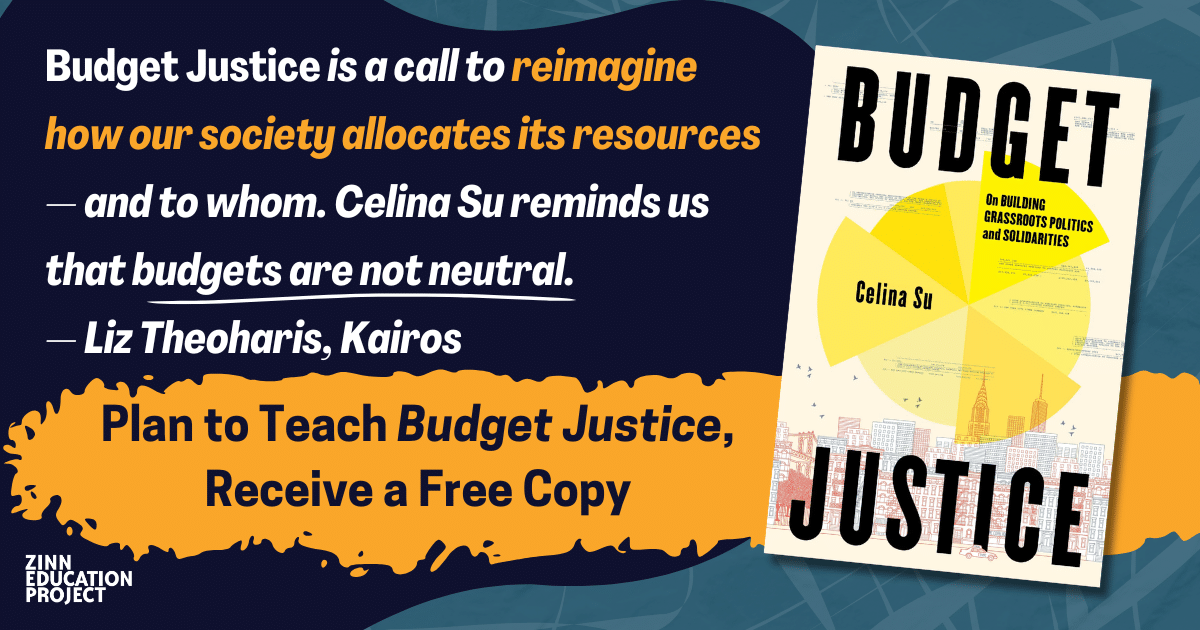
If you are interested in exploring participatory city budgeting with your students, or maybe you already do, request a copy of the new book Budget Justice: On Building Grassroots Politics and Solidarities by Celina Su.
Continue reading
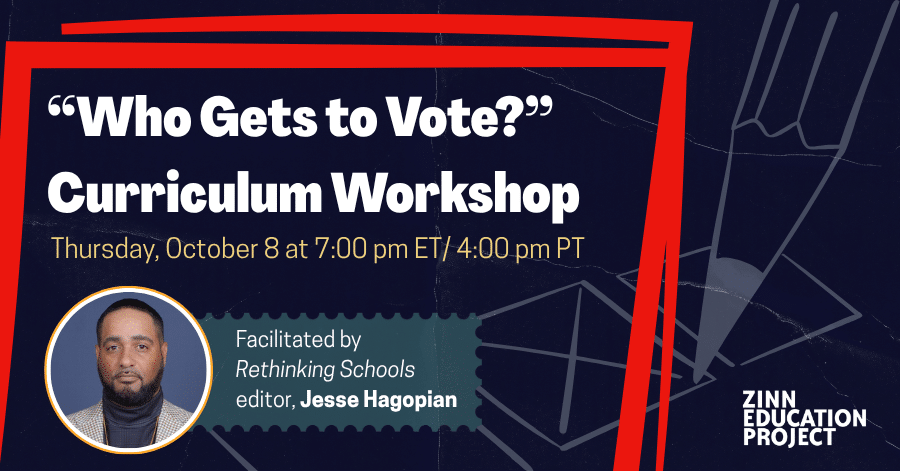
This workshop is a part of our national call to action to teach about voting rights in an age of authoritarianism, which includes a workshop series focused on voting rights, Reconstruction, constitutional struggles, student organizing, and the long movement to expand freedom in the United States.
Continue reading
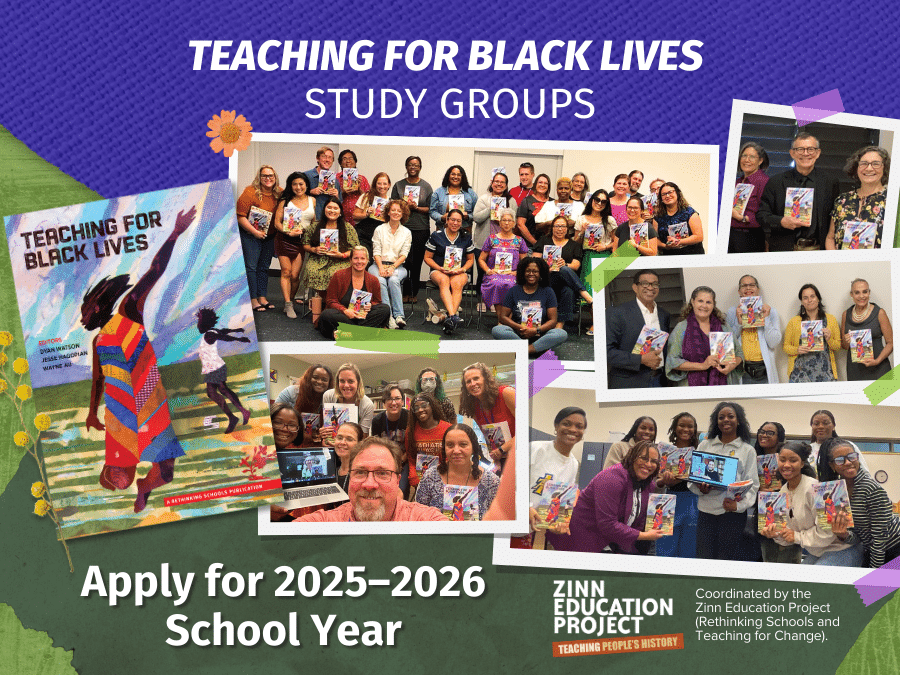
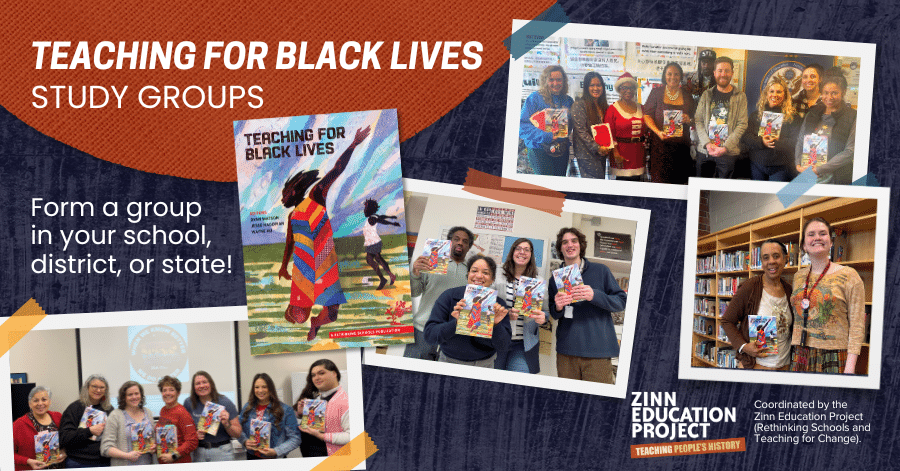
The Zinn Education Project supports Teaching for Black Lives study groups each year. Apply to host a group.
Continue reading
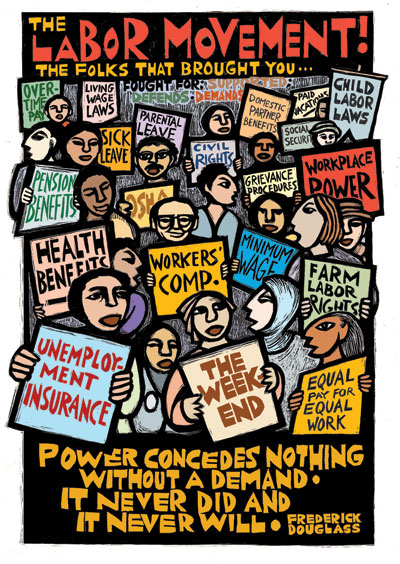
Lessons, books, articles, films, and upcoming events on labor history.
Continue reading
On July 4, 2026, the White House Domestic Policy Council issued a report attacking the Smithsonian National Museum of American History (NMAH).
Continue reading
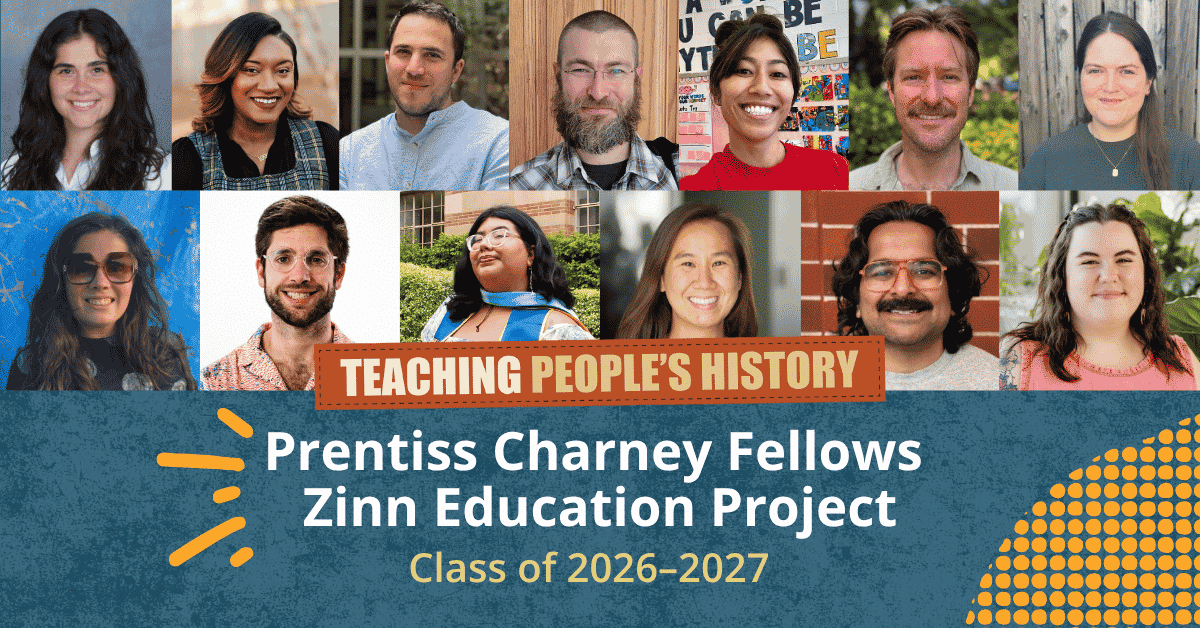
We are thrilled to announce our third cohort of Zinn Education Project Prentiss Charney fellows for the 2026–2027 school year. The fellowship supports a cohort of people’s history educator leaders to study, learn, and organize together.
Continue reading
In a time of censorship and political repression, teacher-led study groups are building communities of resistance and hope.
Continue reading
For the 5th annual Teach Truth Day of Action, Seven Stories Press, Haymarket Books, and One Signal Publishers donated books that address the censorship of people's history.
Continue reading
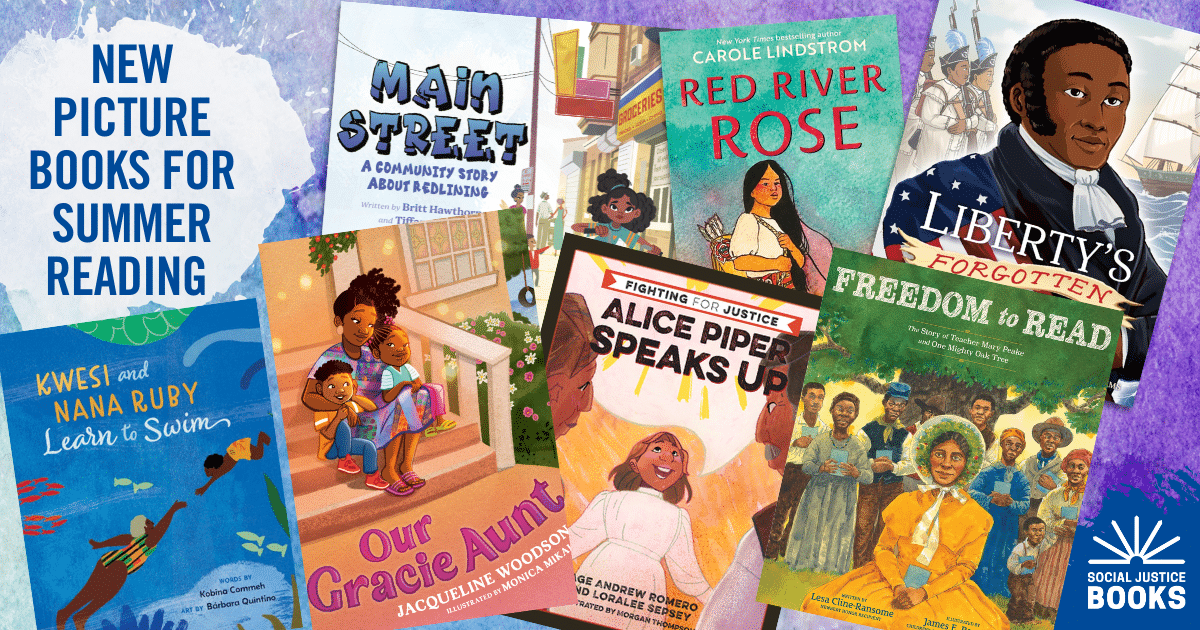
With summer underway, we’re highlighting new people’s history books (and two podcasts), from picture books to graphic novels, and more.
Continue reading
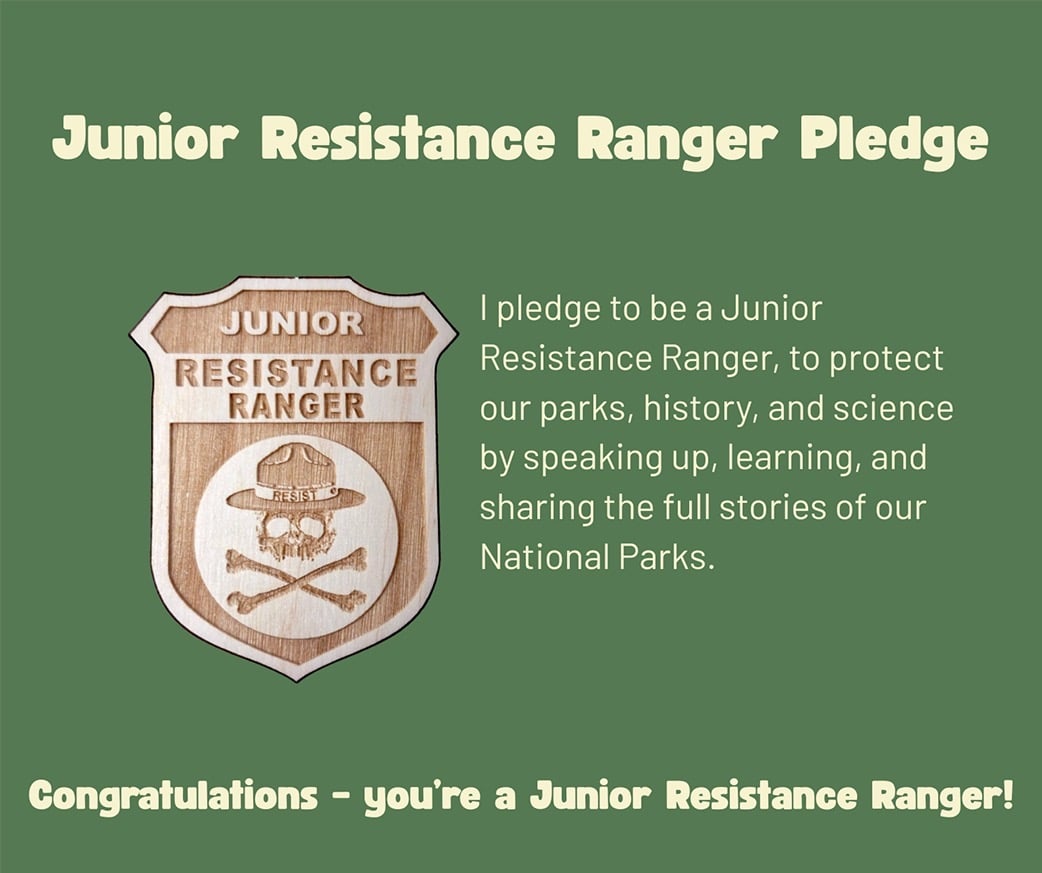
The Zinn Education Project (Rethinking Schools and Teaching for Change) has joined a coalition led by the Resistance Rangers to defend truth telling at the 433 sites of the National Park Service.
Continue reading
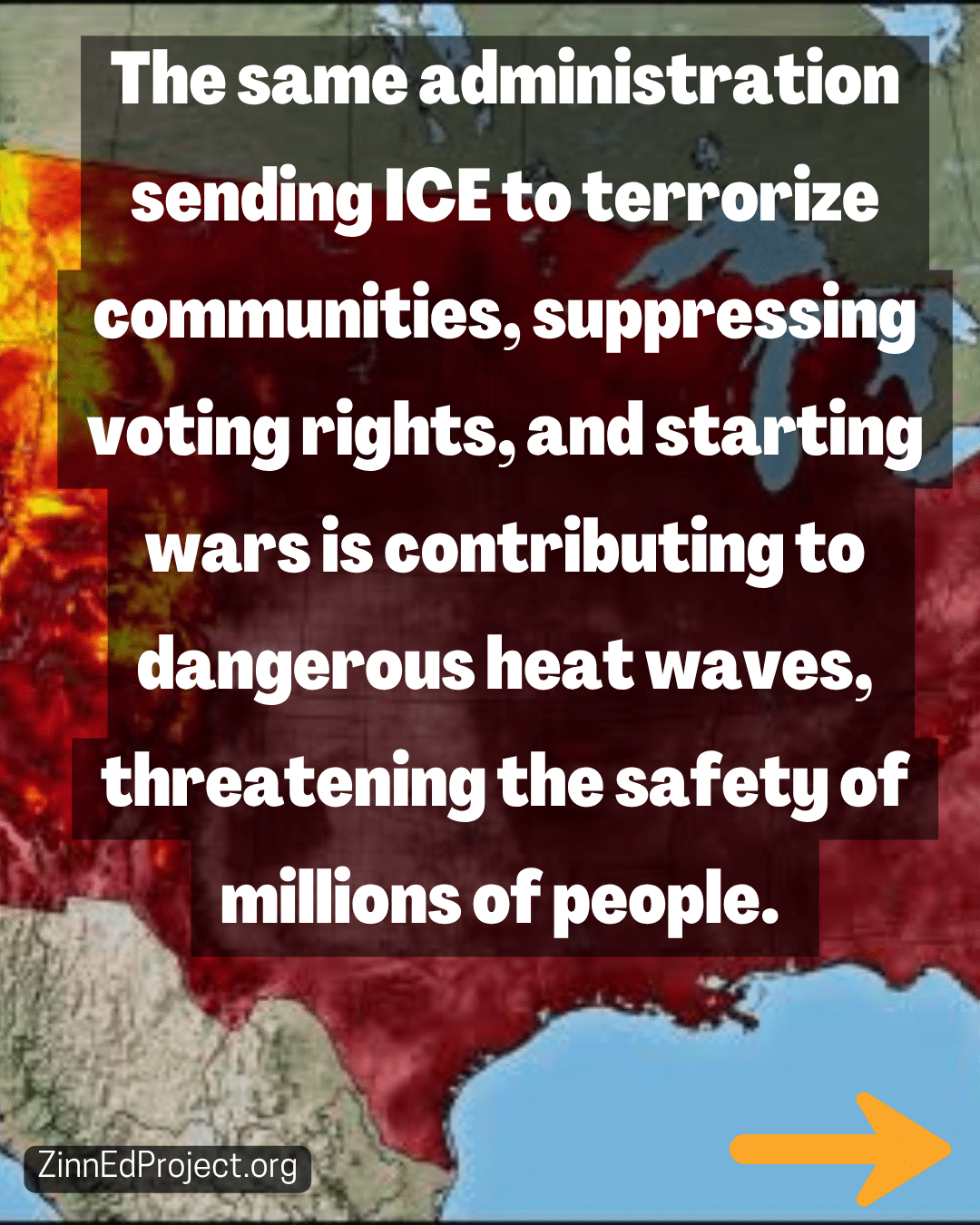
The same administration sending ICE to terrorize communities contributes to the dangerous heat wave, threatening the safety of millions. Addressing this crisis requires getting to the root causes.
Continue reading
In 2022, the Zinn Education Project launched the Prentiss Charney Teacher Fellows program. Named for education activists C. J. Prentiss and Michael Charney, the fellowship offers support for a cohort of people's history teacher leaders each year.
Continue reading
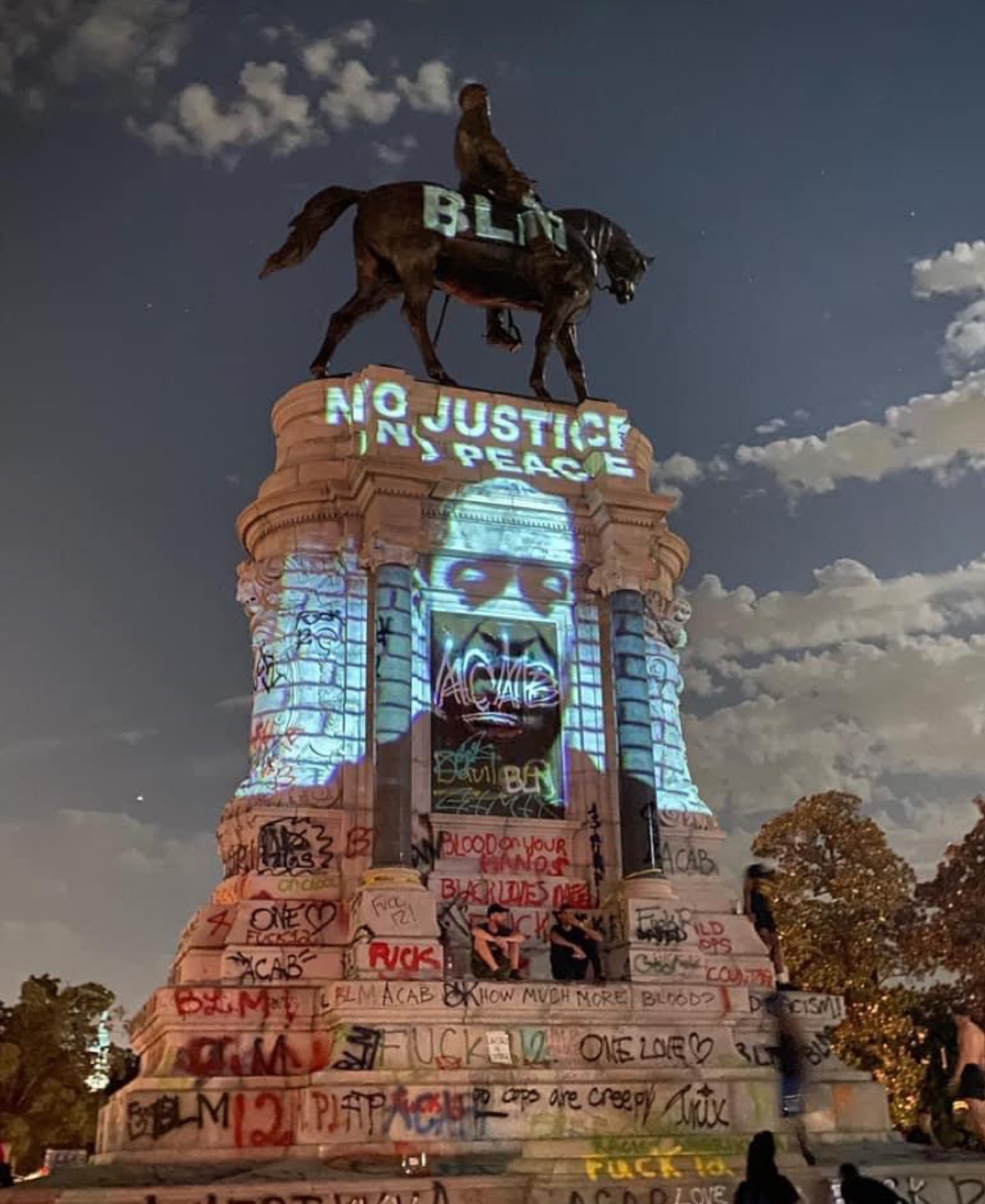
In the face of blatantly racist policies and practices, here are some resources related to public monuments and historic sites to help students consider why an accurate knowledge of history matters.
Continue reading
Across the country, the federal government is sponsoring PragerU’s giant red-white-and-blue “Freedom Trucks” that are pulling into school parking lots carrying a polished story about the American Revolution — one carefully designed to celebrate freedom while burying the people excluded from it.
Continue reading
Juneteenth — June 19th, also known as Emancipation Day — is one of the commemorations of people seizing their freedom from slavery in the United States. Yet, if the right wing has its way, it will be illegal to teach students about Juneteenth.
Continue reading
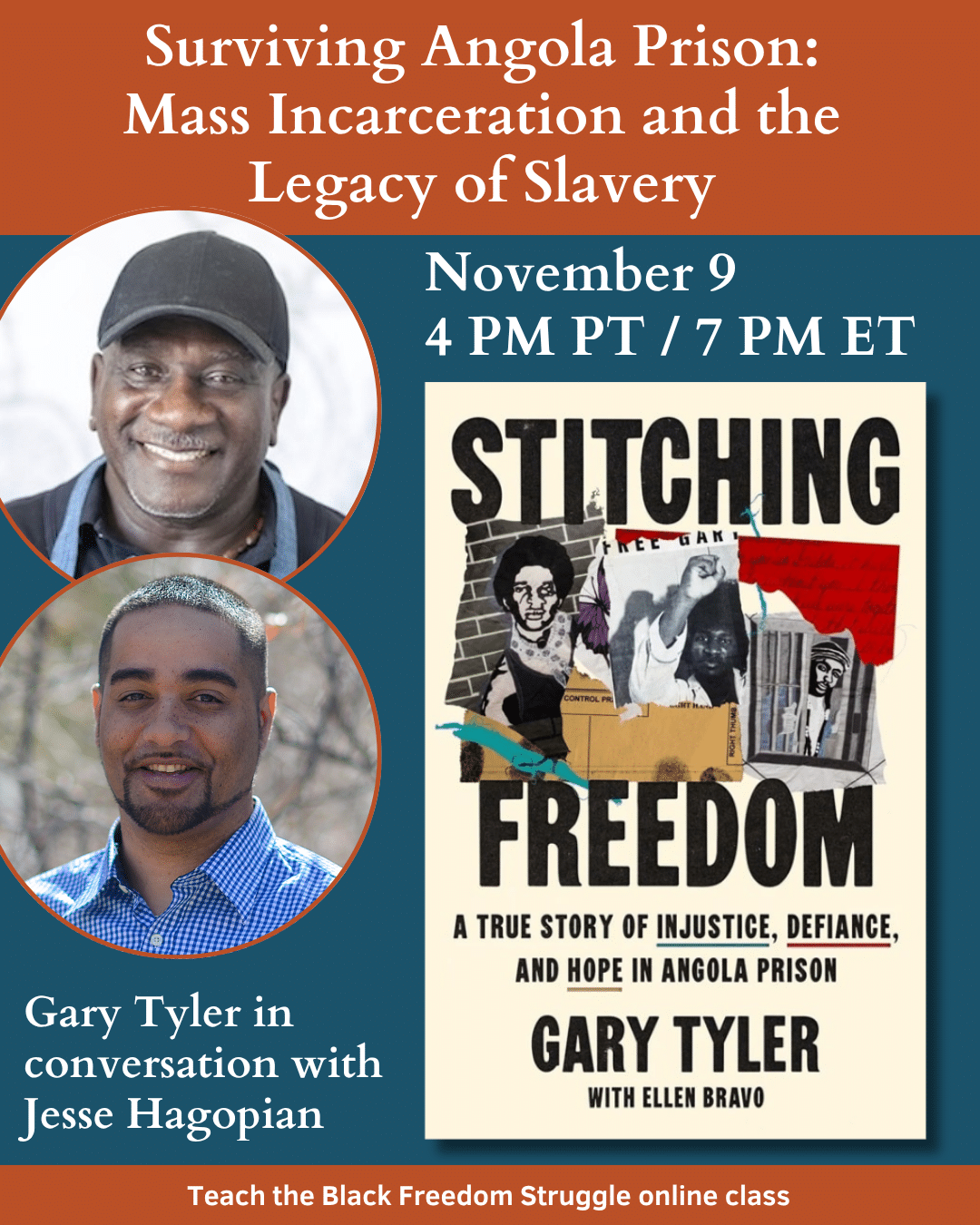
Rethinking Schools editor Jesse Hagopian will be in conversation with Gary Tyler about his book Stitching Freedom: A True Story Injustice, Defiance, and Hope in Angola Prison. This class is part of the Zinn Education Project’s Teach the Black Freedom Struggle online people’s history series.
Continue reading