Bush II and the “War on Terror”
Teaching Activity PDF. By Gayle Olson-Raymer. 18 pages.
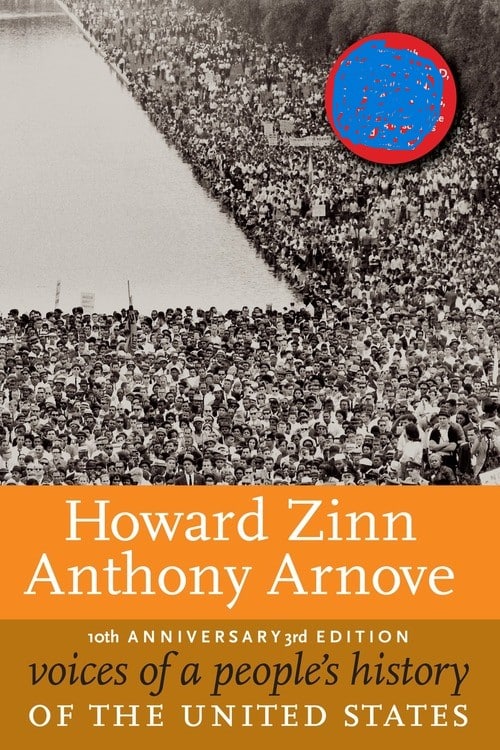
Questions and teaching ideas for Chapter 24 of Voices of a People’s History of the United States on George W. Bush, the “War on Terror,” Afghanistan, Iraq, and the Patriot Act.
Download PDF.
Everything seemed changed in the world after the tragic events of September 11, 2001. Or was it? True, people in the United States experienced a very real fear. After all, it was the first time we were attacked on our own soil. But when we truly subject the rhetoric of the Bush administration to scrutiny, it becomes clear that much did not change. The politics of fear are part of our history. If we move backward to Salem in 1692 or move forward to McCarthyism in the 1950s, it is easy to recall the politics of fear that encouraged irrational reactions to perceived threats. Internal enemies have always threatened the status quo; they were Loyalists in the eighteenth century, Communists from the mid-nineteenth century through 1989, and today they are terrorists.
Since September 11, 2001, the balance between civil liberties and security has often tipped in favor of the latter. But this imbalance is also part of our history. Only seven years after the Bill of Rights was signed, Congress passed the Alien and Sedition Acts. During World War I, a new and more virulent rendition of these acts became law. In the wake of September 11, we saw the passage of the PATRIOT Act. The voices in this chapter recognize that we are fighting old enemies in a new political package. They ask us to listen carefully to the reasons the Bush administration gave for the wars in Afghanistan and Iraq. They ask us to learn from our past mistakes and to question governmental decisions that have lead us into new wars.
Reprinted from Teaching with Voices of a People’s History of the United States.
Published by Seven Stories Press.
Post a comment
Explore by Time Period
- Colonization
- Revolution & Constitution
- Early 19th Century
- Civil War Era
- Reconstruction Period
- Industrial Revolution
- Turn of the Century
- World War I
- Prosperity, Depression, & World War II
- Cold War
- People’s Movement
- 1975 – 2000
- 2001 – Present
- 18th Century
- 19th Century
- 20th Century
- All US History
- 21st Century
Explore by Theme
- African American
- Art & Music
- Asian American
- Civil Rights Movements
- Criminal Justice
- Democracy & Citizenship
- Disability
- Economics
- Education
- Environment & Food
- Immigration
- Imperialism
- Individuals in US History
- Labor
- Language Arts
- Latino
- Laws & Citizen Rights
- LGBT
- Media
- Native American
- Organizing
- Pacific Islander
- Racism & Racial Identity
- Science
- Slavery
- Social Class
- Sports
- US Foreign Policy
- Wars & Related Anti-War Movements
- Women's History
- World History/Global Studies
List of Resources
- Articles
- Audio
- Books: Fiction
- Books: Non-Fiction
- Films
- Picture Books
- Posters
- Profiles
- Songs and Poems
- Spanish/Bilingual
- Teaching Activity PDFs
- Teaching Guides
- Websites
Reading Level
Facebook Status
Zinn Education Project
Saturday, February 4th at 7:12 Today is the birthday of Rosa Louise McCauley Parks (Feb. 4, 1913 – Oct. 24, 2005). Below is a key article by Herbert Kohl from Rethinking Schools that challenges the myths prevalent in children's books and textbooks about Rosa Parks. Here is a link to more resources about Parks and the Montgomery Bus Boycott: http://zinnedproject.org/posts/tag/rosaparks
The Politics of Children’s Literature: What’s Wrong with the Rosa Parks Myth
zinnedproject.org
Aritcle. By Herbert Kohl. 6 pages. A critical analysis that challenges the myths in children’s books about Rosa Parks and the Montgomery Bus Boycott.
Zinn Education Project
Saturday, February 4th at 0:40 via ColorLines Magazine People have taken to Twitter to talk about the histories they wish they'd learned about in high school. Use: #WishiLearnedinHS
Pay Attention! Ethnic Studies #WishiLearnedinHS Curriculum Hits Twitter - COLORLINES
colorlines.com
Educational policies start trending on Twitter.
Zinn Education Project
Friday, February 3rd at 7:25 On this day in 1944, U.S. forces invaded and took control of the Marshall Islands. Who was living there? What is the status of the islands today? The Insular Empire: America in the Marianas is a powerful film on the U.S. colonies in the western Pacific.
Suggestion: ask your students - "Does the U.S. have colonies?" Let us know how they respond.
The Insular Empire: America in the Mariana Islands
zinnedproject.org
The Insular Empire is a one-hour PBS documentary about America’s colonies in the western Pacific. Six thousand miles west of California, the Mariana Islands include the U.S. Territory of Guam and the U.S. Commonwealth of the Northern Mariana Islands (or CNMI). Although most Americans don’t believe t...

You must login to comment.