Challenging Bill Clinton
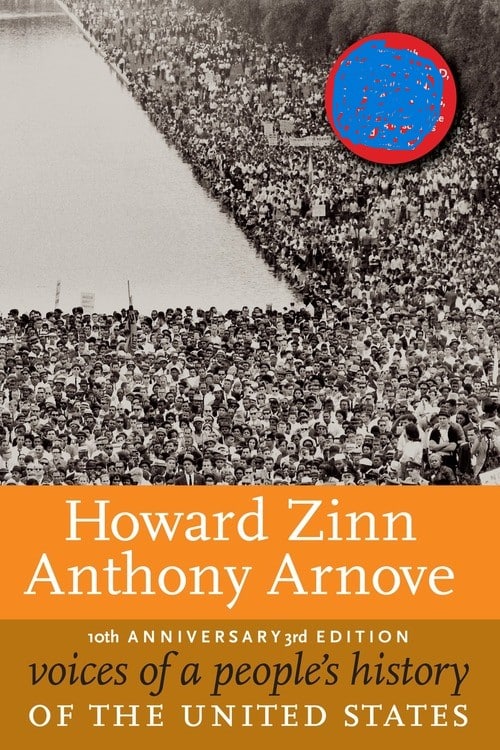
Teaching Activity PDF. By Gayle Olson-Raymer. 17 pages. Questions and teaching ideas for Chapter 23 of Voices of a People’s History of the United States on the Clinton presidency, as well as domestic opposition to his policies.
Download PDF.
During the final days of the 2004 presidential election and after his recuperation from heart surgery, Bill Clinton triumphantly joined the John Kerry campaign. Everywhere he went, he was greeted as an American hero — the Comeback Kid who spoke with the ease and eloquence that so many Democrats yearned to hear again. Earlier in the year, another former president was lauded as he was laid to rest. But were Ronald Reagan and Bill Clinton heroes during their presidencies, and if not, why do we remember them as such?
The voices in this chapter speak to the opposition that arose to many of the domestic and foreign policies of the Clinton administration. They remind us that in a democracy, it is important that the people be vigilant and vocal when examining the leadership of their sitting presidents. And we must be equally as inquisitive about their legacies. Under the Clinton presidency, whom did the North American Free Trade Agreement (NAFTA) really serve? How and why did the number of prisoners in America double? What are the contemporary consequences of our foreign policies with Afghanistan and Iraq? Why did the United States continue to impose the Cuban and Iraqi embargoes? While it will be years before historians have enough distance to provide any definitive answers to these questions, our students can begin to address them by listening to the voices of dissenters who dared to step forward while the policies were being made.
Reprinted from Teaching with Voices of a People’s History of the United States.
Published by Seven Stories Press.
Post a comment
Explore by Time Period
- Colonization
- Revolution & Constitution
- Early 19th Century
- Civil War Era
- Reconstruction Period
- Industrial Revolution
- Turn of the Century
- World War I
- Prosperity, Depression, & World War II
- Cold War
- People’s Movement
- 1975 – 2000
- 2001 – Present
- 18th Century
- 19th Century
- 20th Century
- All US History
- 21st Century
Explore by Theme
- African American
- Art & Music
- Asian American
- Civil Rights Movements
- Criminal Justice
- Democracy & Citizenship
- Disability
- Economics
- Education
- Environment & Food
- Immigration
- Imperialism
- Individuals in US History
- Labor
- Language Arts
- Latino
- Laws & Citizen Rights
- LGBT
- Media
- Native American
- Organizing
- Pacific Islander
- Racism & Racial Identity
- Science
- Slavery
- Social Class
- Sports
- US Foreign Policy
- Wars & Related Anti-War Movements
- Women's History
- World History/Global Studies
List of Resources
- Articles
- Audio
- Books: Fiction
- Books: Non-Fiction
- Films
- Picture Books
- Posters
- Profiles
- Songs and Poems
- Spanish/Bilingual
- Teaching Activity PDFs
- Teaching Guides
- Websites
Reading Level
Facebook Status
Zinn Education Project
Thursday, February 9th at 13:07 The National Museum of the American Indian is in the early planning stages for an exhibit on the Native people of New York State and the surrounding regions. They seek insights into how teachers are covering historic and contemporary issues around Native Americans in their classrooms so that they can best integrate the needs of students and teachers into the exhibition. If you are currently teaching, or have recently taught content related to Native Americans from the Northeast, they would appreciate hearing your input on the survey at the link below. As a thank you, you will automatically be entered in a raffle to win one of three books.
Zinn Education Project
Thursday, February 9th at 7:31 On this day in 1950, Wisconsin Senator Joseph McCarthy delivered a speech during which he claimed to hold a list of known communists in the U.S. State Dep't. The speech grabbed national headlines and launched the paranoia and persecution now known as “McCarthyism.”
Here are classroom resources, including a young adult novel, on McCarthyism:http://zinnedproject.org/posts/tag/mccarthyism
Are there other books, films, lessons you recommend to teach about McCarthyism?
History in Pictures - February
On Feb 9, 1950, Wisconsin Senator Joseph McCarthy delivered a speech at the McLure Hotel during which he claimed to hold a list of known communists in the U.S. State Department. The speech grabbed national headlines and launched the paranoia and persecution now known as “McCarthyism.”
Here are classroom resources, including a young adult novel, on McCarthyism: http://zinnedproject.org/posts/tag/mccarthyism
History in Pictures features just a few of the many stories that are often left out of the textbooks. The sources for these stories include: This Week in History from Peace Buttons (http://www.peacebuttons.info/E-News/thisweek.htm), Planning to Change the World: A Social Justice Plan Book for Teachers (http://www.justiceplanbook.com/), This Day in Civil Rights History (http://zinnedproject.org/posts/13684), History.com (http://www.history.com/this-day-in-history), 50 American Revolutions You Are Not Supposed to Know (http://zinnedproject.org/posts/11632), A People's History of the United States (http://zinnedproject.org/posts/67), Black Facts Online (http://www.blackfacts.com), Today in Labor History (http://www.unionist.com/big-labor/today-in-labor-history), and many more.
Zinn Education Project
Thursday, February 9th at 7:04 Happy birthday Alice Walker. A good day to listen to one of Walker's interviews on Democracy Now!.
Please share your favorite book, essay, or quote by Alice Walker.
Alice Walker on "Overcoming Speechlessness: A Poet Encounters the Horror in Rwanda, Eastern Congo an
www.democracynow.org
As the 2010 Pulitzer Prize winners are announced, we speak with the first African American woman to be awarded a Pulitzer Prize for fiction: author, poet and activist Alice Walker. She was awarded the 1983 Pulitzer for her novel The Color Purple. She was written many books since then. Her latest, ju...

You must login to comment.