

 In the 1960s, while the United States intensified its military intervention in Vietnam, the domestic anti-war movement grew in both size and seriousness. Poor and minority citizens were among the first to recognize that the goals of the United States government in Vietnam were contrary to their own goal of social justice within United States society. Disenfranchised by literacy tests, poll taxes, and intimidation, many were still seeking true democracy within the United States. The alleged fight for democracy and freedom in Vietnam seemed a cruel reminder to those still fighting for voting rights and equality within their own nation that their government did not hold these priorities. Many also noted that because of college deferments and the lack of economic and educational opportunity within poor neighborhoods, poor members of United States society were disproportionately being sent to fight and die in Vietnam.
Some criticized the lack of a defined goal; others criticized what they believed to be the true imperialist goal of the United States government to control Vietnam’s rich natural resources and to maintain a secure and stable chain of military bases in East Asia to both protect United States interests and isolate Communist China.
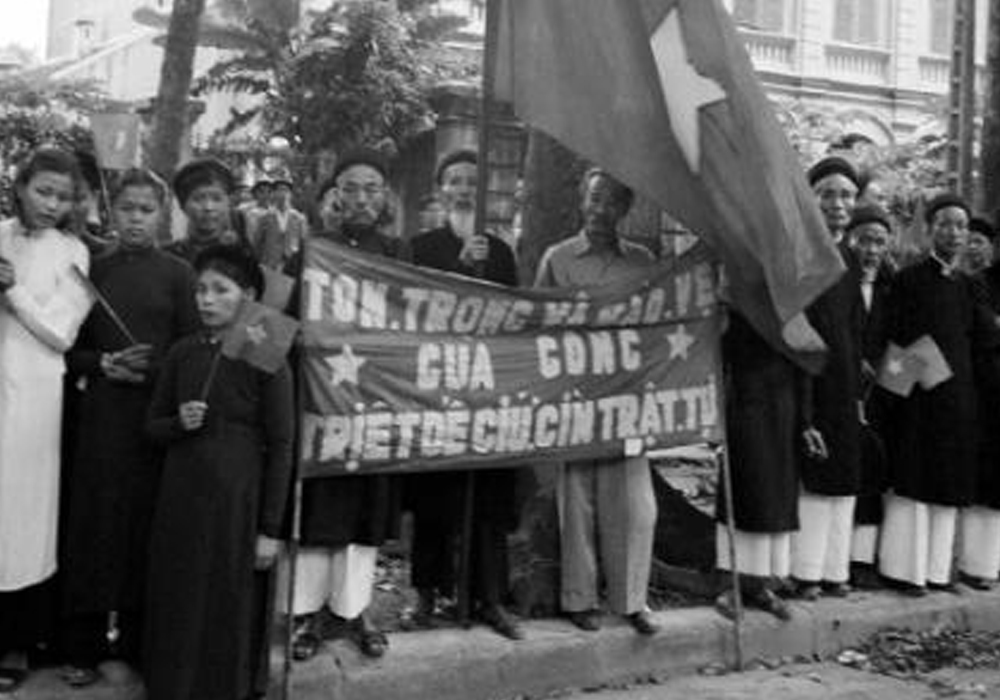
Almost unanimously, protesters decried the damage and horror wrought upon the Vietnamese people and landscape. Though each individual had different reasons and goals for protesting the war in Vietnam, the resistance movement steadily gained power and unity and was influential in bringing United States intervention in Vietnam to an end. The documents in this chapter are necessary supplements to our classroom discussions about Vietnam. They illustrate poignant arguments against fighting the war in Vietnam, provide examples of different forms of resistance, and bring a balanced perspective to the overall discussion of the war. While examining these documents, students can debate what it means to be an active and responsible citizen in a democracy, as well as the efficacy of United States military and political actions in Vietnam.
Reprinted from Teaching with Voices of a People’s History of the United States | Seven Stories Press


Twitter
Google plus
LinkedIn